
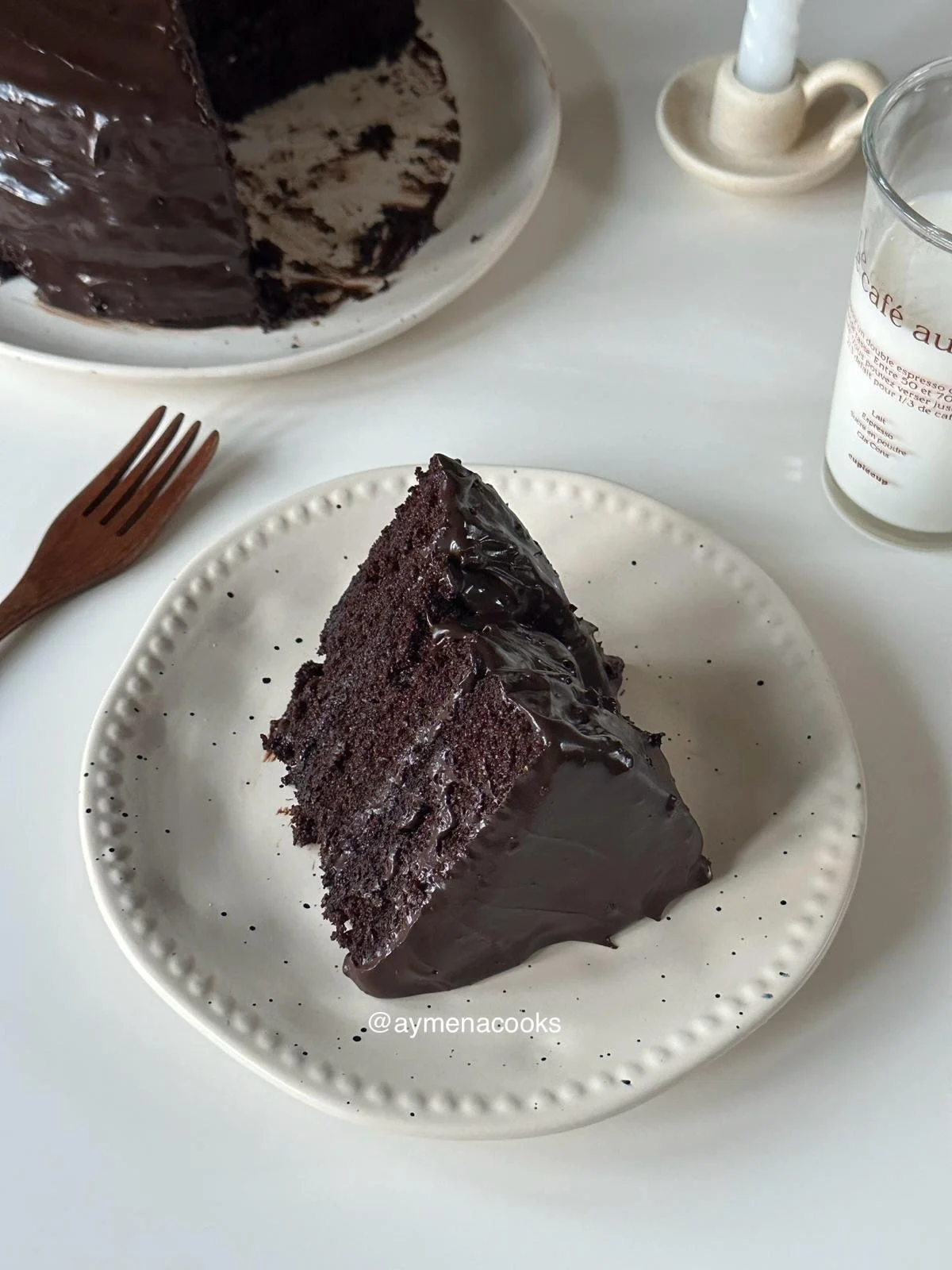
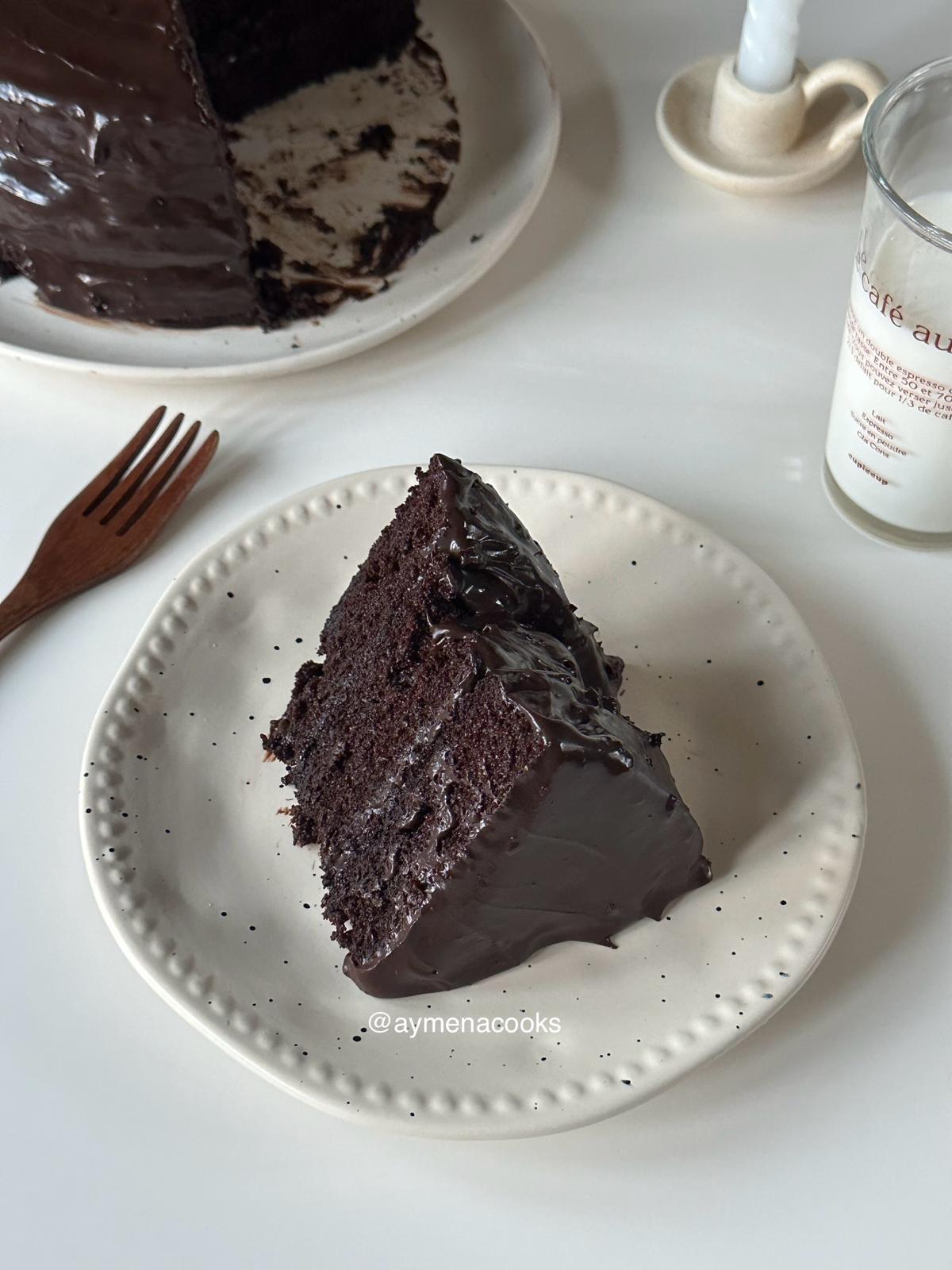
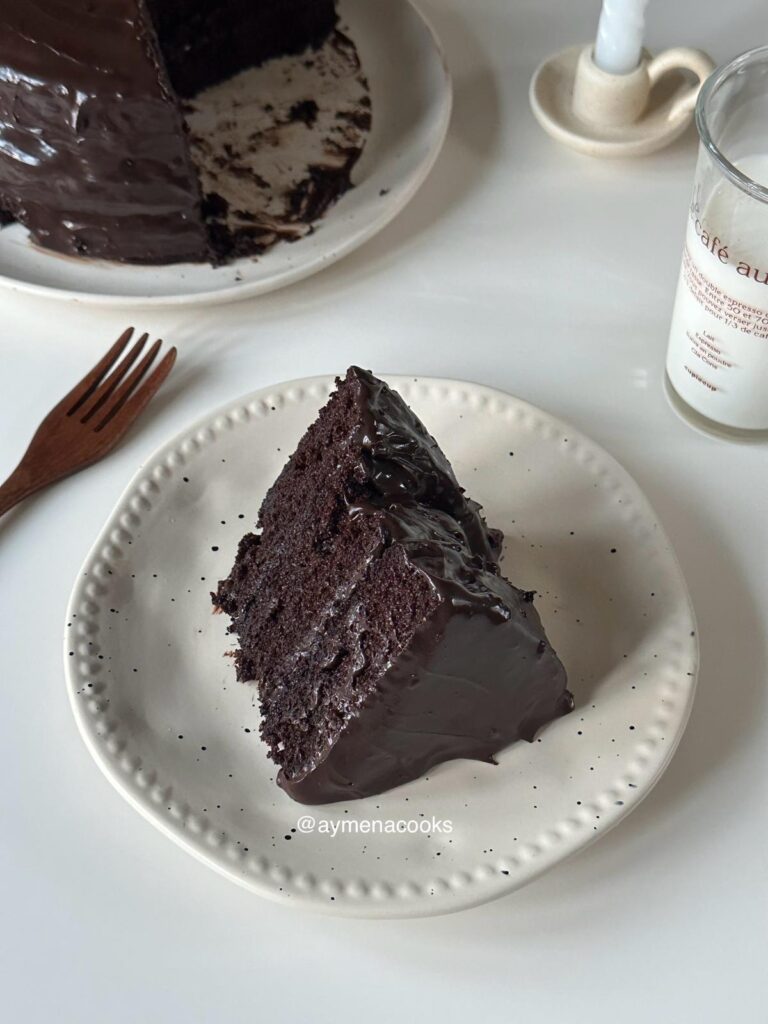
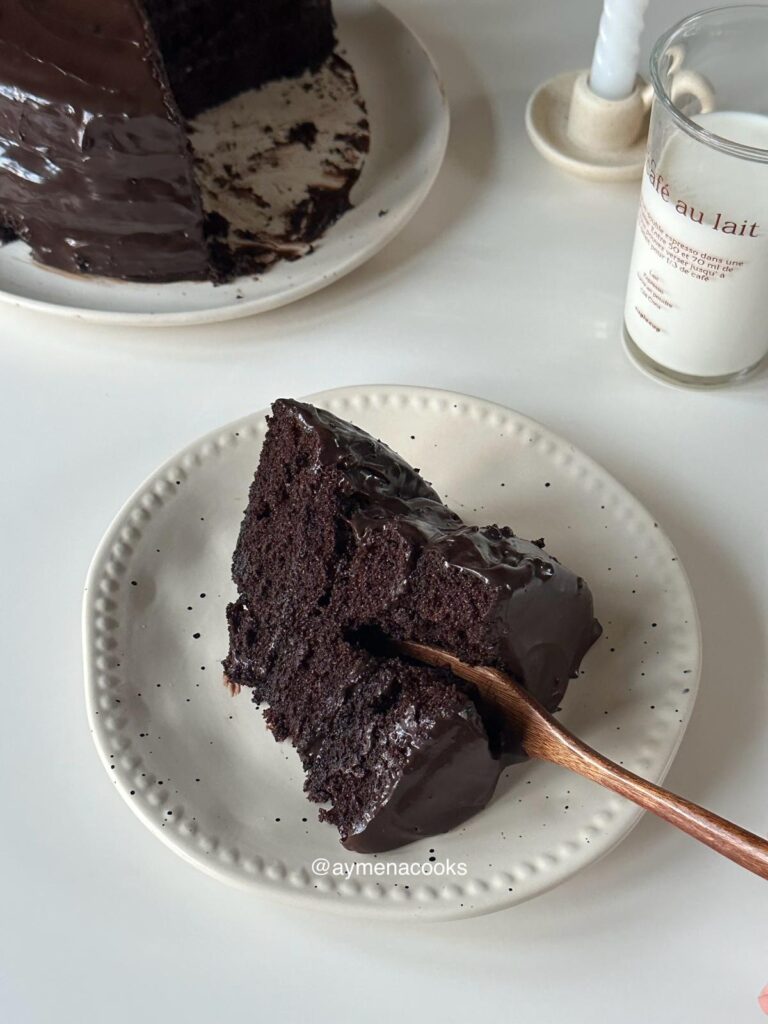
Soft chocolate layers, thick fudge frosting and a slice best served with a cold glass of milk.
A note from my kitchen
Ever since I first watched Matilda, I’ve wondered what that enormous chocolate cake would actually taste like. I imagined something dark, soft and very rich, with thick frosting sinking into every layer and a slightly messy finish that makes you want to cut out a proper slice.
This version uses oil, dark brown sugar and hot coffee to keep the sponge moist, then covers it in a cooked fudge frosting made with cocoa, dark chocolate and butter. The frosting is smooth and glossy rather than fluffy like buttercream, and it thickens as it cools. It doesn’t need perfect edges or careful piping – That almost unfinished look is part of what makes it feel like the cake from the film.
What is Matilda Chocolate Cake?
Matilda chocolate cake is inspired by the giant chocolate cake from the famous Bruce Bogtrotter scene in Matilda. My version is a tall three-layer chocolate cake with thick fudge frosting between the layers and all around the outside.
It’s not an exact recreation of the film, but it has the same rich, chocolatey and indulgent feeling: soft sponge, a generous amount of frosting and a fat slice that’s best served with cold milk.
Why You’ll Love This Recipe
- Soft, moist chocolate layers. Oil, dark brown sugar and hot coffee help the sponge stay tender without making it heavy.
- Thick, glossy fudge frosting. The cooked frosting is smooth and rich, with a pudding-like texture while warm that becomes spreadable as it cools.
- No complicated decorating. A few generous swirls are enough. This cake looks better when it’s a bit dramatic and almost a little messy rather than perfectly polished.
- Made for celebrations. Three layers make it a stunning birthday cake or centrepiece dessert!
What Does it Taste Like?
The sponge has a deep cocoa flavour and a soft, moist crumb. The hot coffee makes the chocolate taste fuller, but the finished cake shouldn’t taste strongly of coffee, so don’t worry too much if you’re not usually a fan of the taste of coffee.
The frosting is darker, richer and silkier than a classic chocolate buttercream. Dark chocolate gives it a slightly bittersweet finish while the butter adds gloss and keeps it soft between the layers. I like letting the cake sit at room temperature for a while before serving, so that the sponge is tender and the frosting softens slightly.
ingredient Notes
The exact measurements are in the recipe card below. These are the ingredients that make the biggest difference to the finished cake.
For the Chocolate Cake Layers
Plain flour or all-purpose flour – Weigh the flour for the most consistent result. Too much flour can make the layers dry or heavy.
Unsweetened cocoa powder — Use regular unsweetened cocoa rather than drinking chocolate. I usually like to use natural cocoa powder.
Dark brown sugar and granulated sugar — Dark brown sugar adds moisture and depth while granulated sugar helps give the cake structure.
Neutral oil — Vegetable, sunflower or canola oil will all work. Oil keeps the sponge soft even after chilling.
Whole milk and white vinegar — Stirring vinegar into the milk creates a quick soured-milk mixture. Use room-temperature milk so it combines easily with the other wet ingredients. This mixture is kind of a substitute for buttermilk, so you can also use buttermilk instead of the milk and vinegar if you have that on hand.
Hot coffee — Coffee deepens the cocoa flavour, and helps make the cake layers extra moist and soft. Use the same amount of hot water if you would rather leave the coffee out.
For the Fudge Frosting
Cocoa powder and cornflour or cornstarch — These form the base of the cooked frosting. Sift them so the mixture stays smooth.
Cold whole milk — Add it gradually while whisking to prevent lumps.
Dark chocolate — Dark chocolate gives the frosting a deeper flavour. You can also use semisweet chocolate or a mixture of dark and milk chocolate for a slightly sweeter fudge frosting.
Cold unsalted butter — Whisked in off the heat, the butter gives the frosting its glossy finish.
Vanilla extract or vanilla paste and salt – Both vanilla and salt round out the chocolate flavour without making the frosting taste noticeably like vanilla.
Equipment You’ll Need
You’ll need three equal round cake pans, parchment paper, two large mixing bowls, a measuring jug, a whisk, a medium saucepan, a fine-mesh sieve and a wire cooling rack.
A digital kitchen scale is especially useful for weighing the ingredients and dividing the batter evenly between the pans. A cake turntable and offset spatula also make assembling the cake easier, but neither is essential.
How to Make Matilda Chocolate Cake
The full ingredient amounts and condensed method are in the recipe card at the bottom of the page. The stages below explain the main steps and the visual cues to look for.
1. Prepare the Pans and Milk Mixture
Preheat the oven to 180°C (350°F). Grease three 7.5-inch or 8-inch round cake pans and line the bases with parchment paper.
Stir the white vinegar into the room-temperature milk, then set it aside while you prepare the other ingredients.
2. Mix the Cake Batter
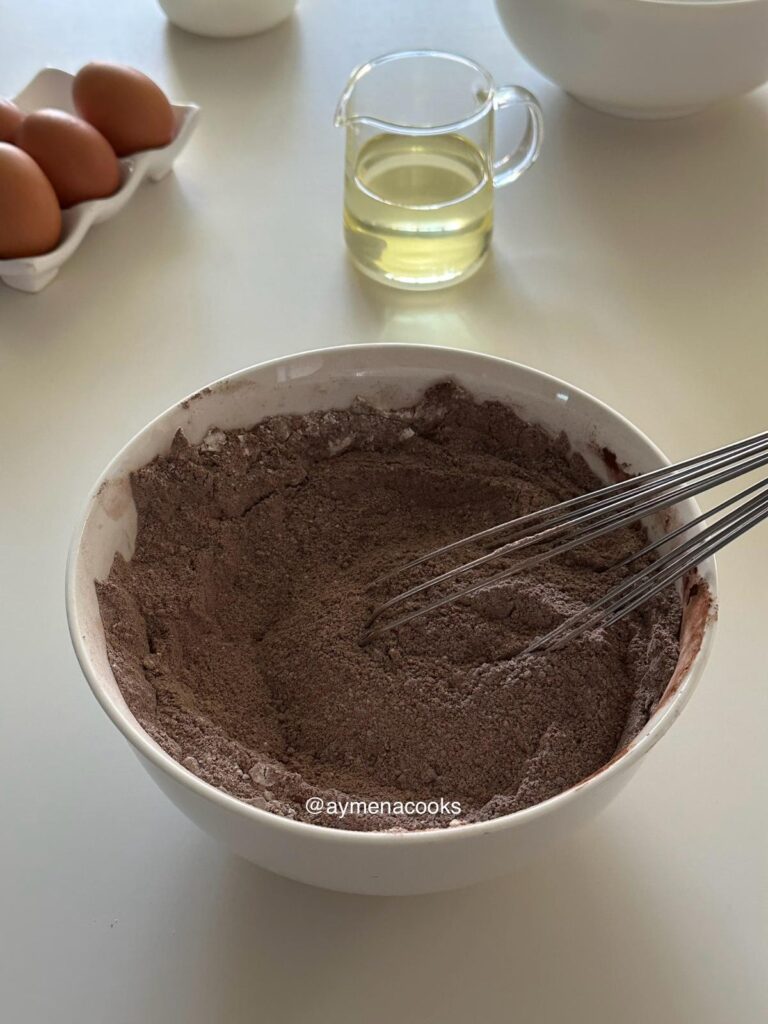
Whisk the flour, cocoa powder, baking powder, baking soda, salt, granulated sugar and dark brown sugar together in a large bowl. Break up any large lumps of cocoa or brown sugar.
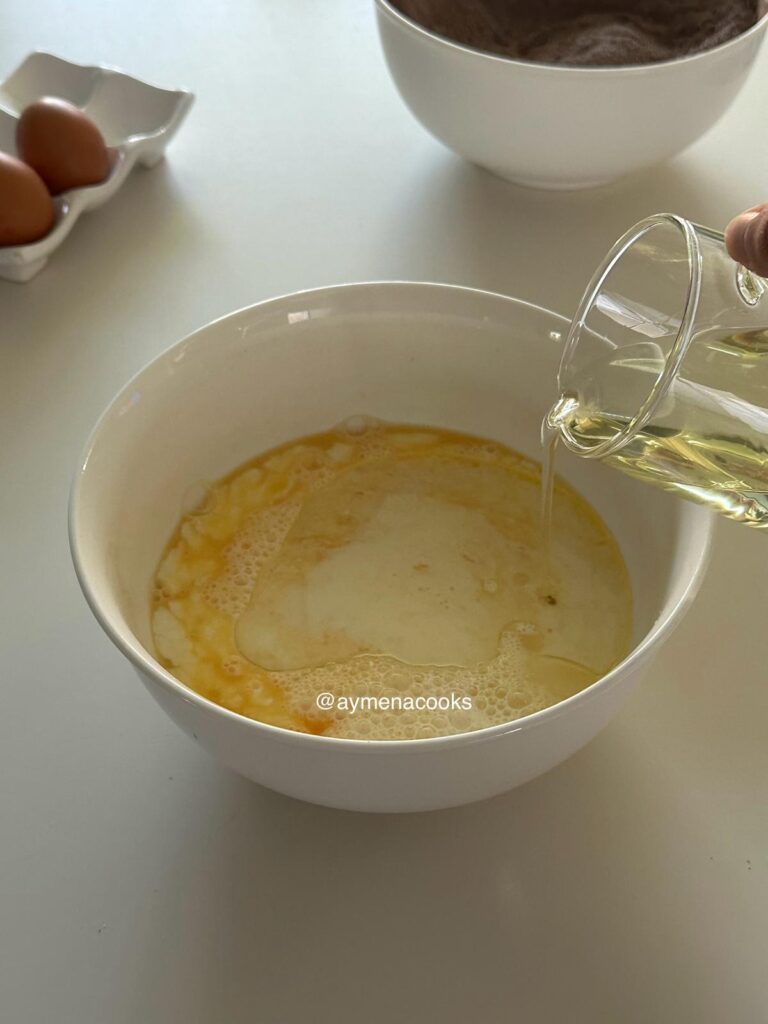
In a second bowl, whisk the eggs. Add the milk mixture, oil and vanilla, then whisk again until smooth.
Pour the wet ingredients into the dry ingredients and mix gently until there are no visible streaks of flour. Stop as soon as the batter comes together so that you don’t over mix the batter.
3. Add the Coffee and Bake
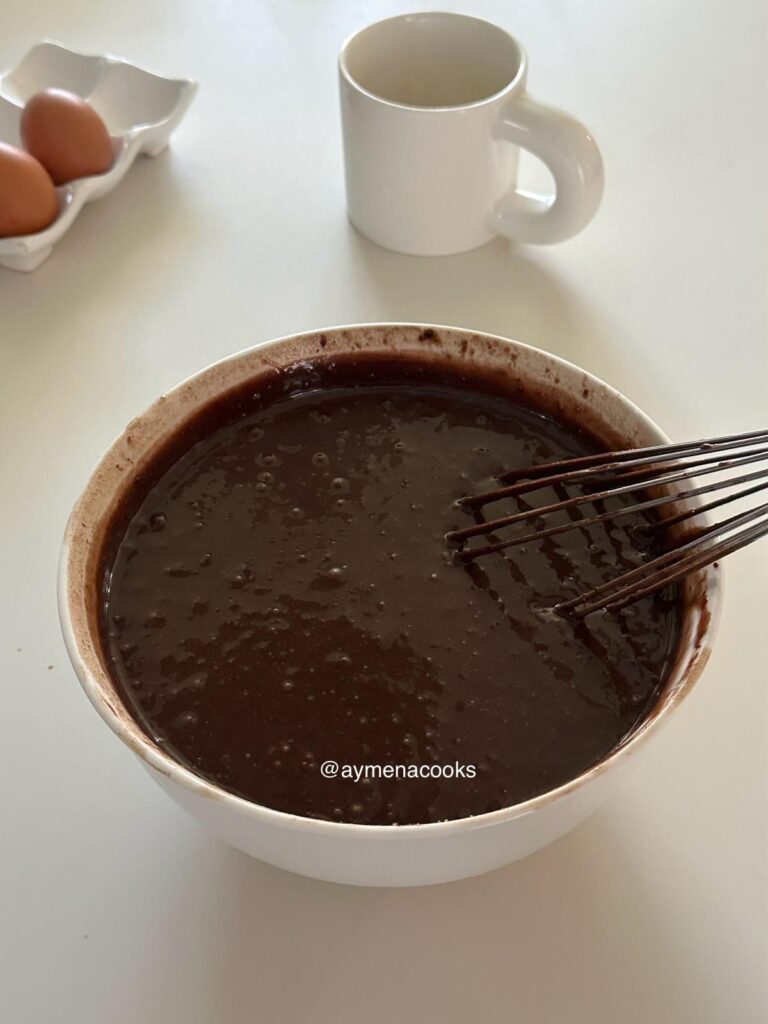
Pour in the hot coffee and whisk until the cake batter is smooth. It will become noticeably thinner, which is completely normal. The batter looks much thinner than a standard butter cake batter after the coffee is added. Do not add extra flour.
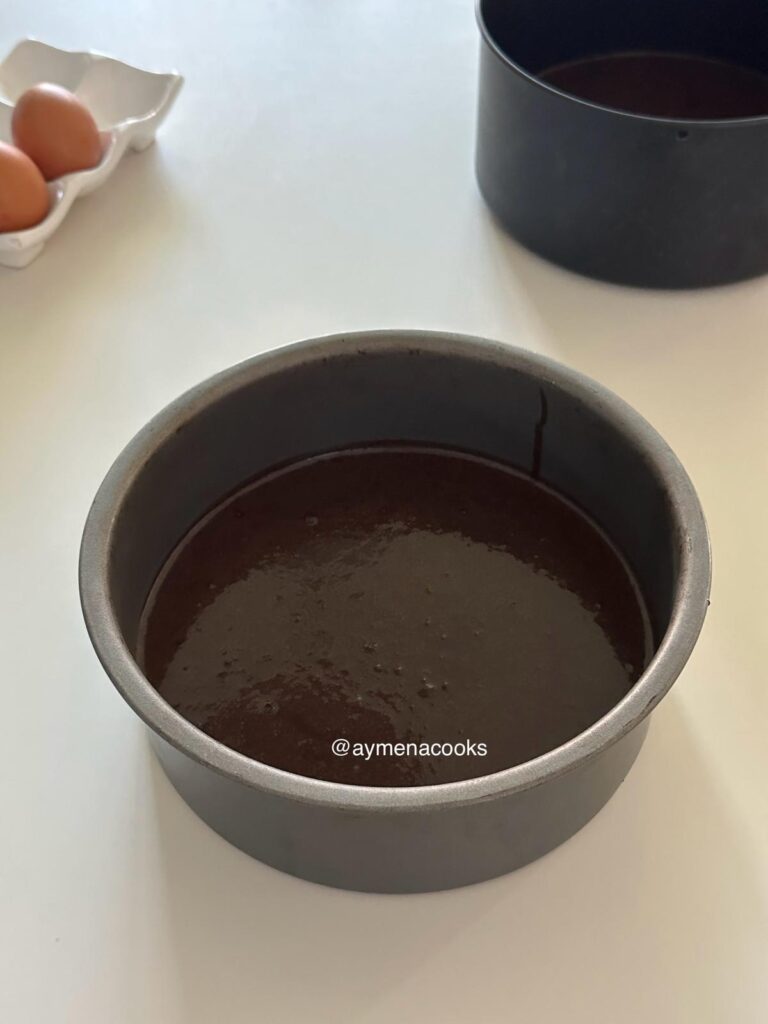
Divide the batter evenly between the prepared pans. Bake for 20–25 minutes, or until the centres spring back lightly and a skewer inserted into the middle comes out with a few moist crumbs but no wet batter.
Leave the cakes in their pans for 15–20 minutes, then carefully turn them out onto a wire rack. Let them cool completely before adding any frosting.
4. Cook the Fudge Frosting Base
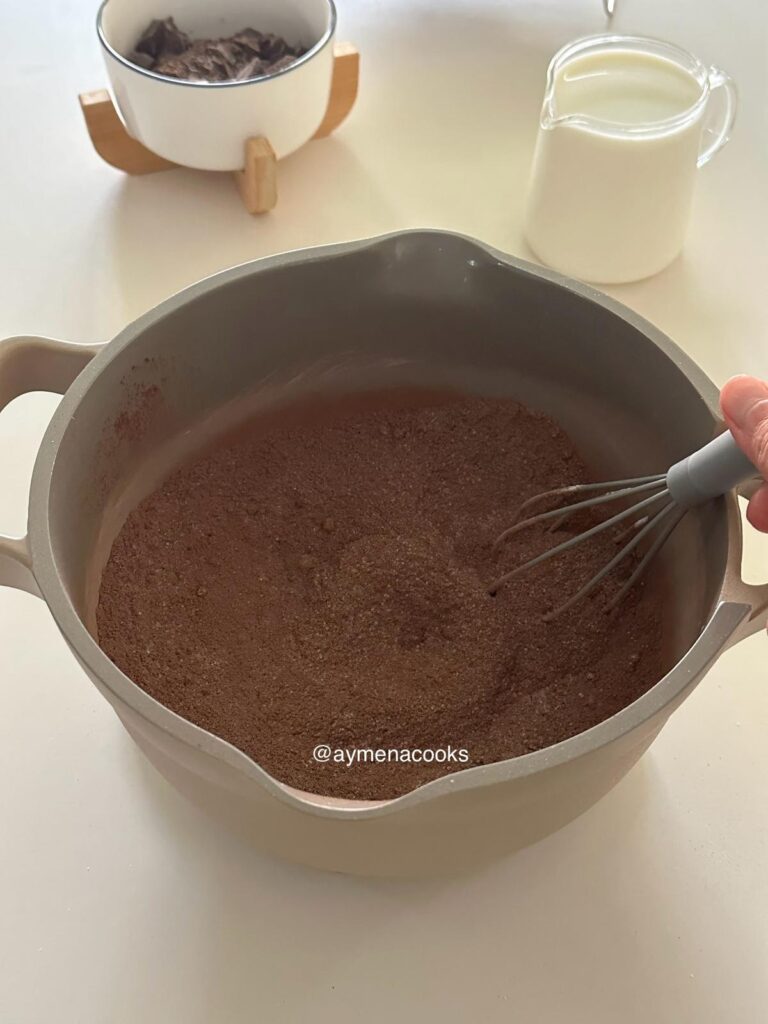
Sift the cocoa powder and cornflour into a saucepan. Add the granulated sugar and salt, then whisk everything together.
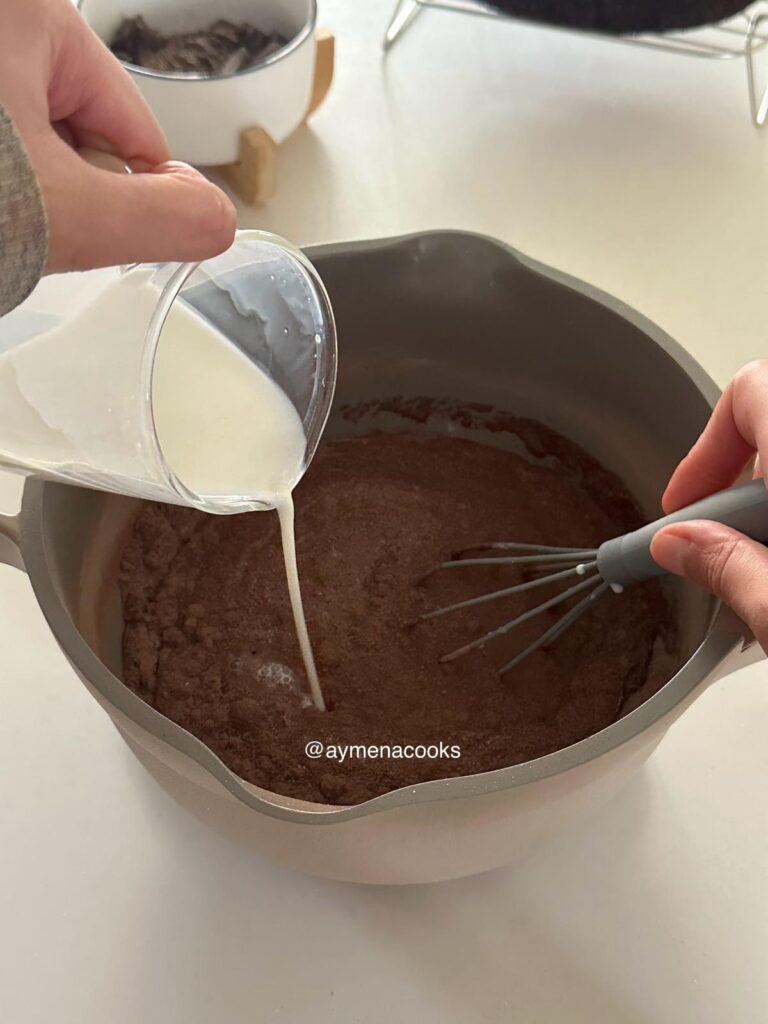
Gradually add the cold milk, whisking as you pour, until the mixture is smooth. Place the saucepan over low-medium heat and cook while whisking continuously. It will look thin at first, then begin to bubble gently and thicken.
Remove it from the heat once the whisk leaves brief trails through the mixture and the mixture has visibly thickened.
5. Finish and Cool the Frosting
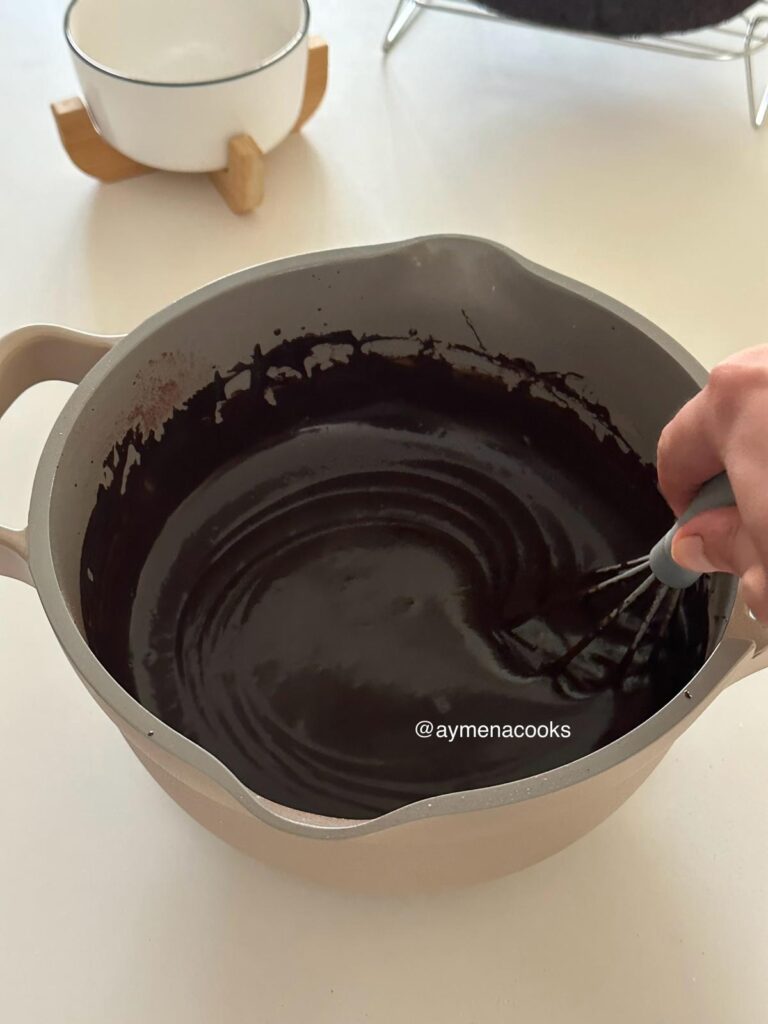
Add the chopped chocolate to the hot mixture and whisk until completely melted and dissolved in the mixture. Add the cold butter and whisk again until glossy, then stir in the vanilla and a bit of salt.
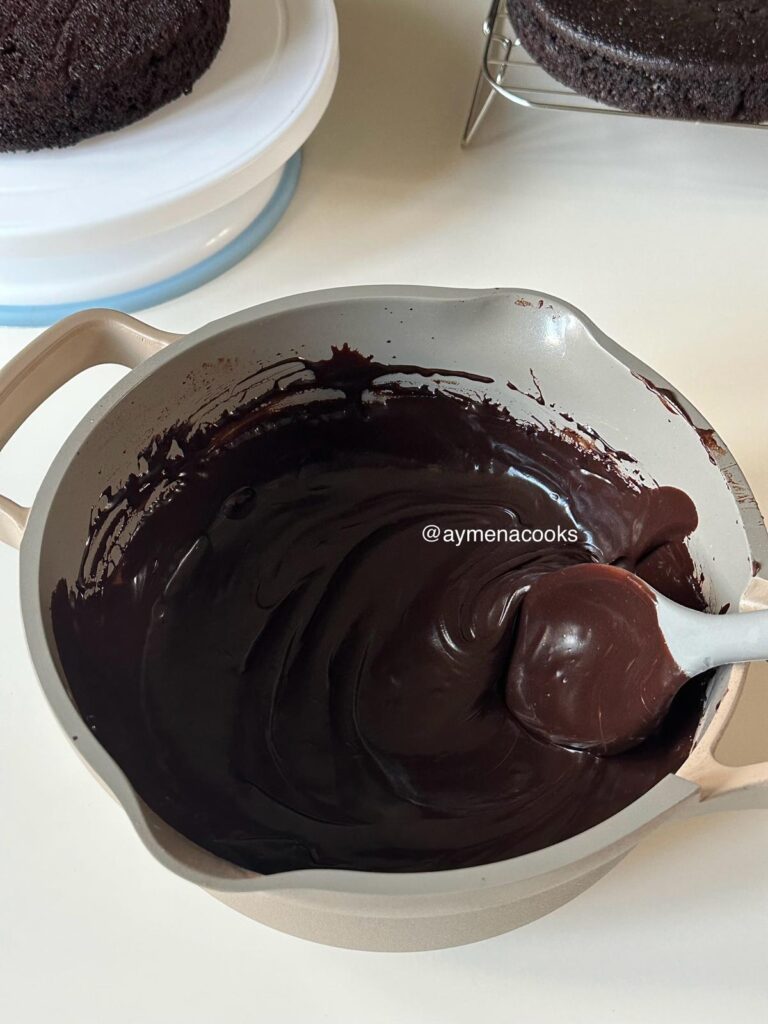
The frosting will still be too loose to spread while warm. so Let it cool at room temperature for around 30 minutes, then chill it in the fridge until thick and spreadable.
It should hold its shape on a spoon but still spread smoothly. Chill it for another 10–15 minutes if it is too soft. If it becomes too firm, leave it at room temperature until it loosens.
6. Stack and Frost the Cake
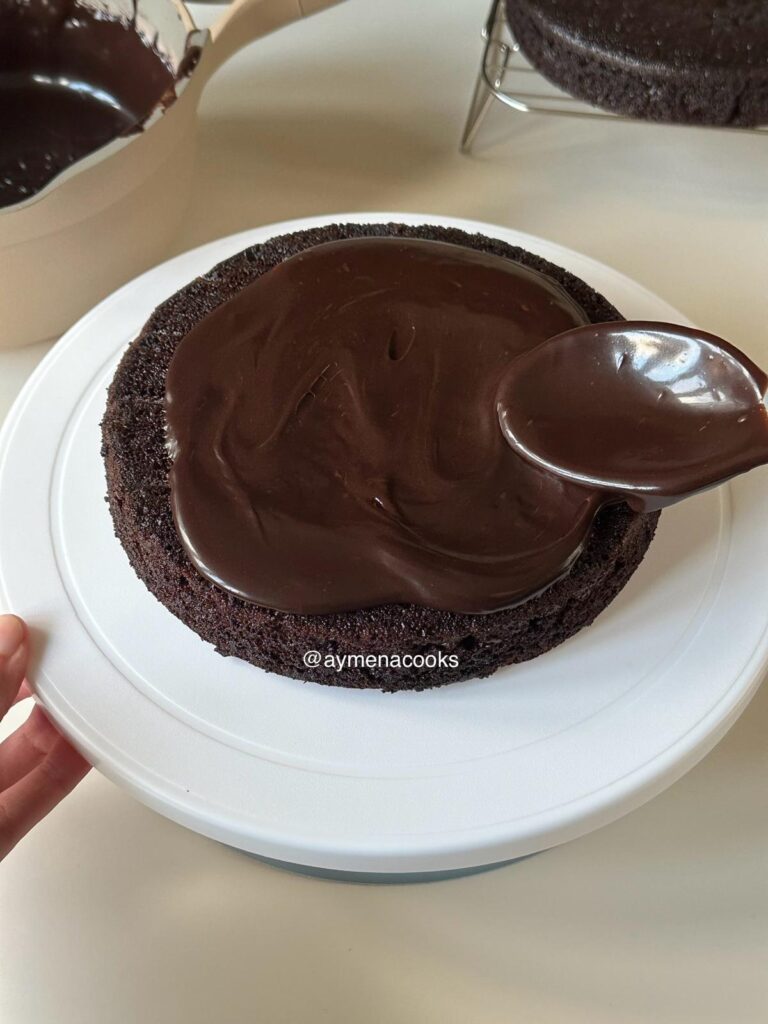
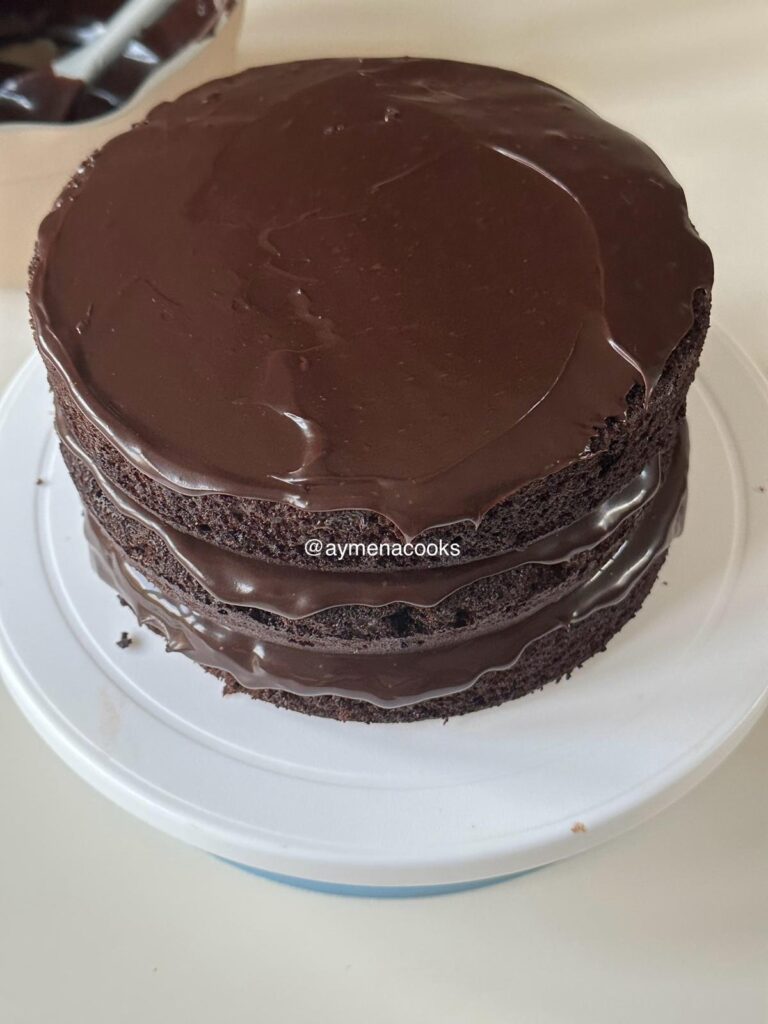
Place the first cooled cake layer on a serving plate or cake turntable. Spread a generous layer of frosting over the top, add the second layer and repeat, then add the final cake layer.
Chill the stacked cake for 15–20 minutes so the layers can settle. Then, cover the top and sides with the remaining frosting, using the back of a spoon or an offset spatula to create soft swirls.
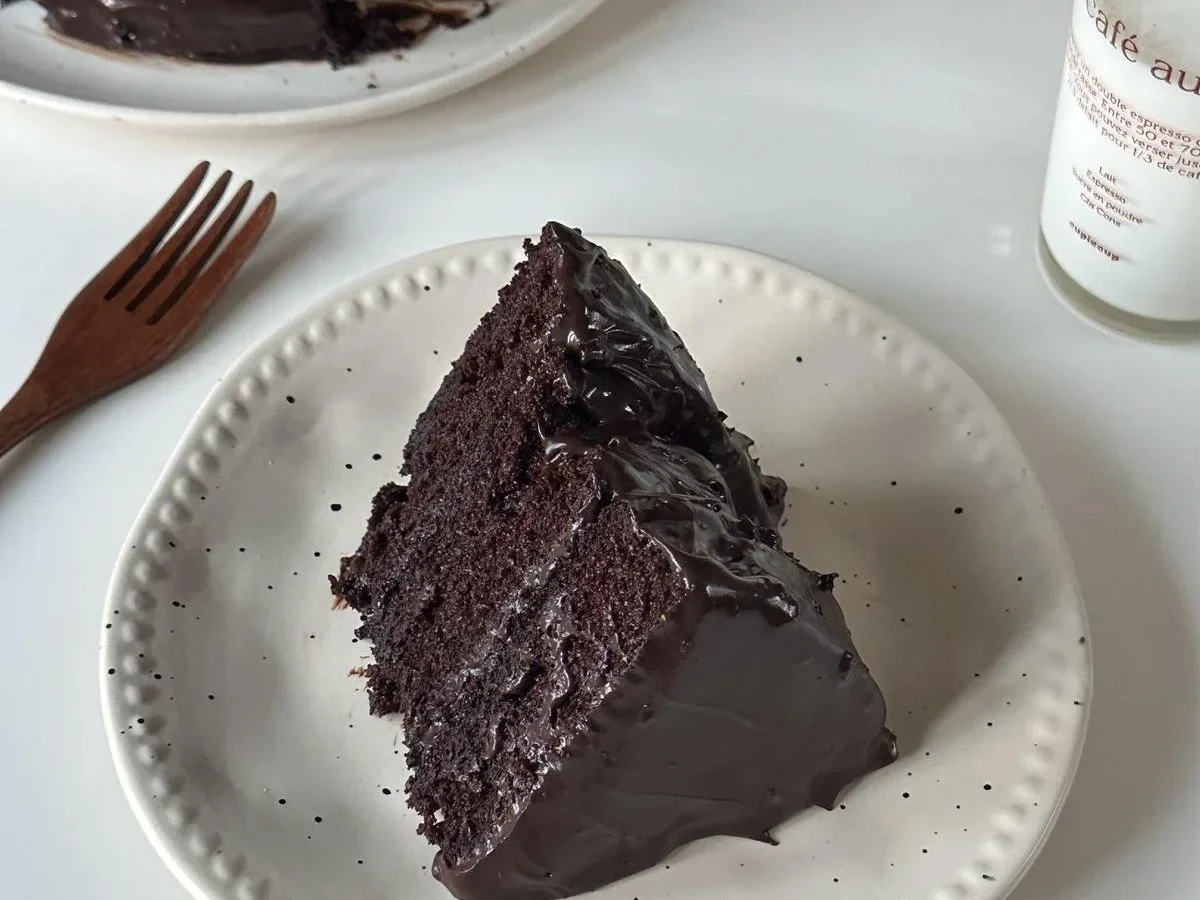
Cut a thick slice and serve with a cold glass of milk.
Tips for the Best Matilda Chocolate Cake
- Use a kitchen scale. The cake is much more reliable when the flour, cocoa and sugars are weighed.
- Use room-temperature eggs and milk. They combine more evenly with the oil and help the batter stay smooth.
- Add the coffee while it’s hot. Hot liquid helps bring out the cocoa flavour and gives the batter its final fluid consistency. It also helps make the cake layers extra soft and moist.
- Do not over mix. Once the wet and dry ingredients are combined, mix only until the flour disappears.
- Do not over bake. Start checking near the lower end of the baking time. A few moist crumbs are ideal.
- Cool the layers completely. Even slightly warm cake can soften the frosting and make the layers slide.
- Judge the frosting by texture to know if it’s ready to use or not. It thickens considerably as it cools – you can chill it longer if it’s runny or let it soften at room temperature if it becomes too firm.
- Chill the stacked layers before the final coat. This gives the cake more stability and makes the outside easier to frost.
Make Ahead and Storage
Making the Cake Ahead
The cake layers can be baked one day before assembly. Once they are completely cool, wrap each layer tightly so it doesn’t dry out.
For the most predictable texture, make the fudge frosting on the day you assemble the cake. You can also prepare the full cake earlier in the day and keep it chilled until needed.
Storing the Assembled Cake
Because the frosting contains milk, keep the assembled cake covered in the fridge. It’s best eaten within three days.
For the softest texture, let the cake or individual slices sit at room temperature for around 15-20 minutes before serving.
Freezing
I haven’t included a freezing method for the fully assembled cake because the cooked fudge frosting can change texture once frozen and thawed. I’d recommend making the layers one day ahead, as it’s the more reliable option.
Frequently Asked Questions
Can I Make Matilda Chocolate Cake Without Coffee?
Yes. You can replace the hot coffee with the same amount of hot water. But if you’re worried about using hot coffee because you don’t like the taste of it, just know that the coffee deepens the chocolate flavour in the cake, and the finished cake won’t taste strongly of coffee.
Why Is My Fudge Frosting Too Runny?
The frosting may still be too warm. It looks something like a thick sauce when freshly cooked and thickens up further and becomes spreadable as it cools. Mine needed around 30 minutes at room temperature and around another hour in the fridge before it held its shape on a spoon and became spreadable. But I’d recommend using the texture of the frosting rather than the exact time as as guide.
If it’s still loose after chilling, return it to the fridge for another 10–15 minutes. If it never thickened while cooking, it may have needed a little longer on the stove.
Can I Use Semisweet or Milk Chocolate in the Frosting?
Semisweet chocolate works well if you prefer a sweeter frosting. You can also use a mixture of dark and milk chocolate.
Using only very sweet milk chocolate will make the frosting noticeably sweeter and might be a bit too much, so adjust according to the flavour you want.
How Do I Know When the Cake Layers Are Done?
The centres should spring back lightly when touched and a skewer inserted into the middle should come out with a few moist crumbs. If there’s still wet batter on the skewer, I’d recommend baking the layers for a few minutes longer. And you don’t want the skewer to be completely dry either.
Can I Use 8-Inch Cake Pans?
Yes. I used three 7.5-inch pans, which gave me taller layers. But you can also use three 8-inch pans, which will give slightly thinner layers than 7.5-inch pans. If using 8-inch pans, just begin checking on the cakes a few minutes earlier and use the same doneness cues rather than relying only on the clock.
Does Matilda Chocolate Cake Need to Be Refrigerated?
Yes. The cooked fudge frosting contains milk, so keep the assembled cake covered in the fridge. But I’d recommend bringing it towards room temperature before serving so that the sponge and frosting can soften.
More Chocolate Desserts
For another rich chocolate bake, try my brown butter brownies with crackly tops and fudgy centres.
My brownie cups for two are a smaller option when you want a warm chocolate dessert without making a full cake.
You might also like this chocolate Basque cheesecake, with a dark caramelised top and creamy centre.
For something with even more texture, try my Dubai chocolate brownies with pistachio cream and crisp kadayif.
You can also browse the full chocolate dessert recipes collection.
Matilda Chocolate Cake
This Matilda chocolate cake has three moist chocolate layers and thick, glossy fudge frosting, inspired by Bruce Bogtrotter’s famous cake scene.
- 20 minprep
- 40 mincook
- total
- 8-10servings
- inactive1 hr 40 min
ingredients
21 ingredientsChocolate Cake Layers
- 220ml full fat whole milk, room temperature (¾ cup + 3 tbsps)
- 1 tbsp white distilled vinegar
- 250g plain flour or all purpose flour (1 cup + ½ cup + 1 tbsp)
- 80g unsweetened cocoa powder (¾ cup)
- 2 tsps baking powder
- 2 tsps baking soda
- ½ tsp salt
- 240g granulated sugar (1 cup + 2 tbsps)
- 150g dark brown sugar (¾ cup, packed)
- 3 large eggs, room temperature
- 150ml oil (½ cup + 2 tbsps)
- 1.5 tsps vanilla extract
- 200ml hot coffee or 200ml hot water and 2 tsps instant coffee (¾ cup + 1 tbsp hot coffee or ¾ cup + 1 tbsp hot water and 2 tsps instant coffee)
Fudge Frosting
- 50g unsweetened cocoa powder (¼ cup + 3 tbsps)
- 32g cornstarch or cornflour (¼ cup)
- 280g granulated sugar (1 cup + ¼ cup + 1 tbsp)
- A pinch of salt
- 335ml cold milk (1 cup + ¼ cup + 2 tbsps)
- 135g dark chocolate, chopped (¾ cup)
- 55g cold unsalted butter (¼ cup)
- ¾ tsp vanilla extract
method
18 steps- Preheat the oven to 180°C (350°F). Grease three 7.5-inch round cake pans and line the bases with parchment paper.
- Stir the room-temperature milk and white vinegar together in a jug, then set aside.
- Add the flour, cocoa powder, baking powder, baking soda, salt, granulated sugar and dark brown sugar to a large bowl. Whisk until evenly combined.
- In a second large bowl, whisk the eggs. Add the milk and vinegar mixture, the oil and the vanilla, then whisk until smooth.
- Pour the wet ingredients into the dry ingredients and whisk gently until just combined. Do not over mix.
- Add the hot coffee and whisk until the batter is relatively smooth. The batter will become thinner at this stage.
- Divide the batter evenly between the prepared baking pans.
- Bake for 20-25 minutes, or until a skewer inserted into the centre comes out with a few moist crumbs but no wet batter.
- Cool the cakes in their pans for 15–20 minutes, then carefully turn them out onto a wire rack and leave them to cool completely.
- To make the frosting, sift the cocoa powder and cornflour into a saucepan. Add the granulated sugar and salt, then whisk together.
- Gradually pour in the cold milk, whisking continuously until smooth.
- Place the saucepan over low-medium heat and cook for 8–10 minutes, whisking continuously, until the mixture gently bubbles and thickens.
- Remove the pan from the heat. Add the chopped chocolate to the mixture and whisk until melted and smooth.
- Add the cold butter and whisk until fully incorporated, then stir in the vanilla.
- Cool the frosting at room temperature for around 30 minutes, then chill in the fridge until thick and spreadable (about an hour). If it is still too soft, chill for another 10–15 minutes.
- Place the first cooled cake layer on a serving plate or cake turntable. Spread over a generous layer of frosting, add the second layer and repeat, then add the final cake layer.
- Chill the stacked cake for 15–20 minutes so the layers can settle.
- Cover the top and sides with the remaining frosting. Create soft swirls with an offset spatula or the back of a spoon, then slice and serve.
notes
- Use a kitchen scale for the most accurate result.
- The batter will look quite fluid after the hot coffee is added; this is normal.
- Do not over mix once the wet and dry ingredients are combined.
- Start checking the cakes near the lower end of the baking time. A few moist crumbs are ideal - not completely dry and no wet batter either.
- The frosting thickens as it cools. Chill it longer if it's runny or leave it at room temperature if it becomes too firm.
- Use hot water instead of coffee if you'd rather not use coffee.
- Semisweet chocolate or a mixture of dark and milk chocolate can be used instead of just dark chocolate for a sweeter frosting.
- Skip the salt in the frosting if using salted butter.
- Three 8-inch pans can be used, but the layers will be slightly thinner. Thinner layers will take less time to bake, so begin checking them a few minutes earlier.
tools
12 tools- Digital kitchen scale
- Measuring jug
- 2 large mixing bowls
- Balloon whisk or electric hand mixer
- 3 x 7.5-inch round cake pans
- Parchment paper
- Wire cooling rack
- Medium saucepan
- Fine-mesh sieve
- Rubber spatula
- Cake turntable, optional
- Offset spatula, optional
Amazing recipe
i tried this recipe for my brothers 18th birthday, my parents said it was the best cake ive ever made its sooo good!! thank you xx
so happy you liked it!! <3
Girl…fluffy, easy, moisttt, delicious, fishy, satisfying. This cake is actually my favorite, my relatives thought it was fantastic! Thank you, will be sharing.🥰🫶🏻
lol, not fishy
this is the BEST recipe I have ever used. the cake came out of the oven beautiful, it was perfect. the recipe is almost fail-proof thanks to the writers detailed notes. thank you so much, this is like the only cake I’ve ever made that hasn’t failed😭. i would deffo use this recipe again.💕
thank you so much, i’m so happy to hear this!!! <3
I just made this cake and it’s the MOST delicious cake I’ve ever had….I’m such a chocolate girl but I’ve been eating vanilla cakes more because they seem to be more moist, however, this chocolate cake was SO moist and fluffy and tasty—the best of all worlds. I’ll definitely be making it again! Thank you so much!
so so happy to hear this! glad you enjoyed it <3