
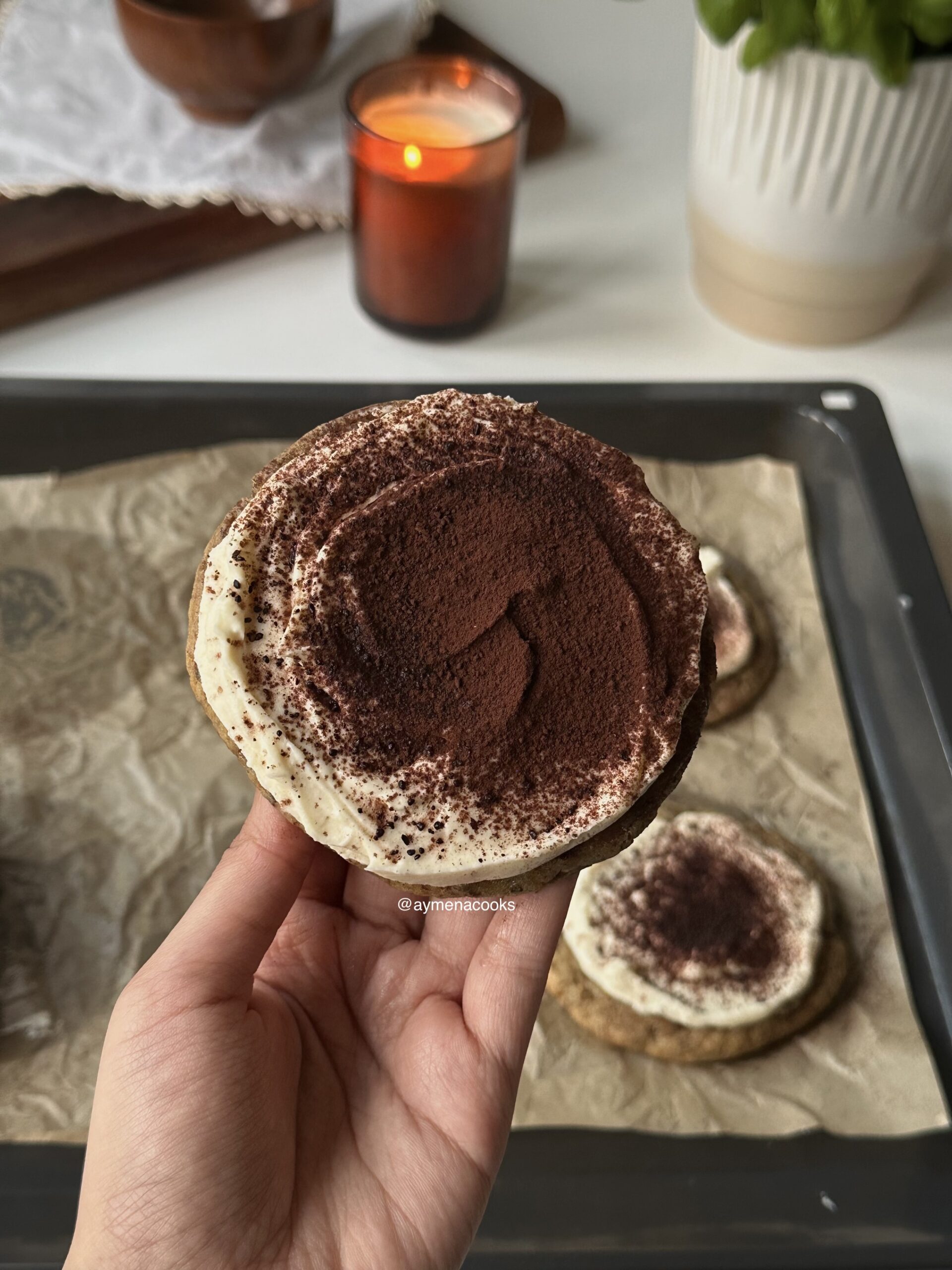
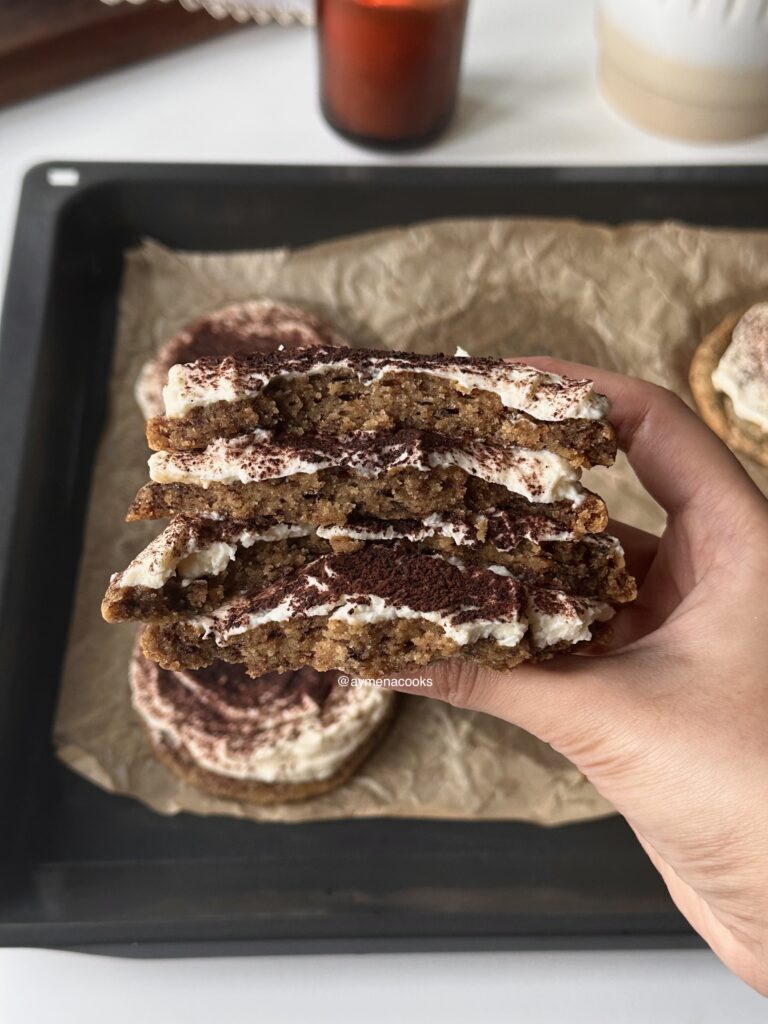
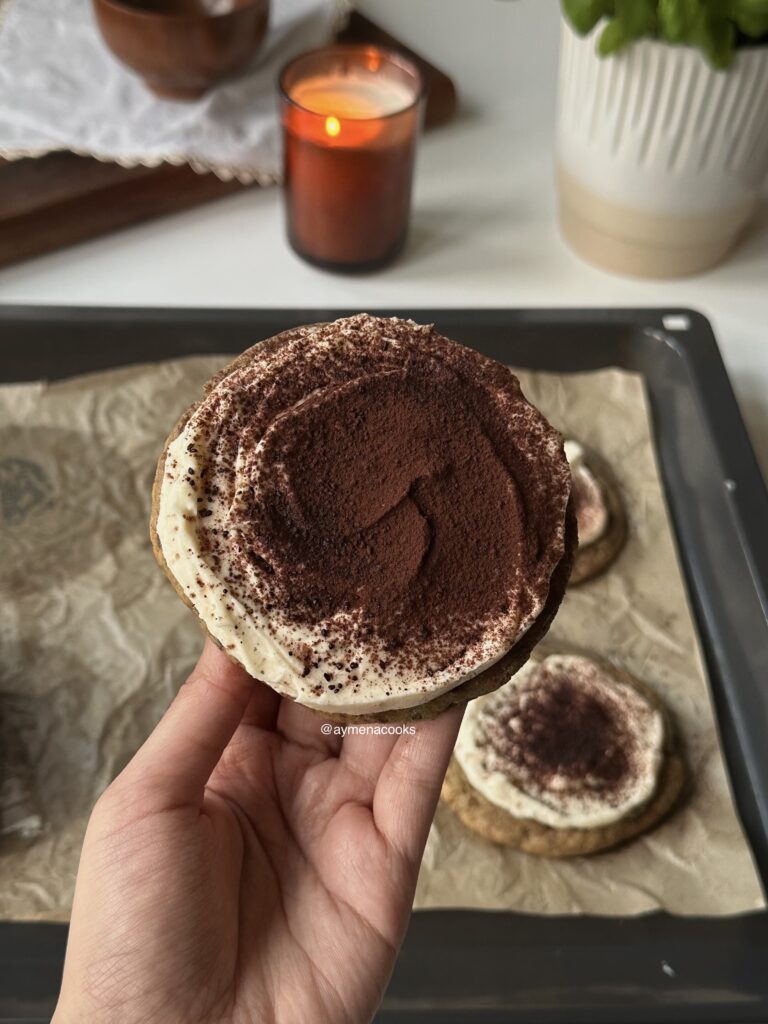
brown butter, espresso, a layer of mascarpone cream and a light dusting of cocoa.
A note from my kitchen
I wanted these cookies to have the coffee flavor and creaminess of tiramisu, with the chew of a brown butter cookie. I decided to use my snickerdoodle dough as the starting point: the toasted butter works well with espresso, and mixing the coffee into the dough gives it enough flavor to come through beneath the mascarpone.
I’ve kept the frosting vanilla so there’s a creamy, light contrast to the coffee underneath. The cocoa only needs to be a light dusting. You want a little bitterness at the end without losing the flavor of the mascarpone.
What Are Tiramisu Cookies?
These tiramisu cookies bring together a chewy espresso cookie base, whipped mascarpone frosting and a dusting of cocoa powder.
I use my brown butter snickerdoodles as the starting point for the dough. Browning the butter also adds a toasted flavor that works really well with the espresso. The frosting is made with mascarpone, heavy cream, powdered sugar and vanilla, then finished with unsweetened cocoa powder on top.
Why You’ll Love This Recipe
- Tiramisu in cookie form. Espresso, mascarpone and cocoa give you the flavors of tiramisu with a big, chewy brown butter cookie underneath.
- Soft centers and buttery edges. The cookies are soft and chewy through the middle, with crisp edges beneath the creamy topping.
- Brown butter makes the cookies richer. Browning the butter adds a nutty, toasted flavor that works really well with the espresso and brown sugar.
- Plenty of coffee flavor. The espresso is mixed through the dough, so the coffee still comes through once you add the mascarpone cream.
- A generous layer of mascarpone frosting. Whipping mascarpone with cream and vanilla gives you a thick, creamy topping, with a dusting of cocoa to balance its sweetness.
What Do They Taste Like?
Espresso gives the cookies a strong coffee flavor, with toasted, slightly caramel-like notes from the brown butter. The centers are soft and chewy, with a little more bite around the buttery edges.
The mascarpone cream is soft, creamy, and has a subtle vanilla flavor. The cocoa dusting adds a little bitterness. The cookie underneath stays focused on espresso and brown butter, so you can taste both through the frosting.
ingredient Notes
The exact measurements are in the recipe card below.
Brown Butter
Use unsalted butter and weigh it before browning. Once browned, use the butter and the golden milk solids left in the pan. Those little flecks belong in the dough, so be sure scrape them into the mixing bowl as well.
Let the browned butter cool until it’s just slightly warm before mixing the dough, especially before adding the egg. It should still be liquid when you use it.
Light Brown Sugar and Granulated Sugar
The dough uses both light brown sugar and granulated sugar. The brown sugar adds a light molasses flavor and moisture, while the granulated sugar helps balance the texture. I’d recommend keeping this combination as written in the recipe so the dough has the intended balance of sweetness, chew and spread.
Instant Espresso Powder
Use instant espresso powder, mixed into the dry ingredients. Break up any lumps as you whisk it through the flour so the coffee is distributed throughout the dough.
Instant espresso powder is soluble coffee. Ground espresso beans are different and will leave gritty particles in the cookies. There’s no need to brew the coffee or dissolve the powder in water for this recipe.
All-Purpose Flour
Use all-purpose flour or plain flour, and I’d really recommend weighing it with a scale for this dough. Scooping flour straight from the bag can pack too much into a cup and leave the cookies drier than intended.
Egg, Cream and Vanilla
The egg brings the dough together. Use it at room temperature so it mixes more easily with the cooled butter. A little bit of heavy cream adds richness, while vanilla rounds out the coffee flavor. the cream for the dough is separate from the cream used for the frosting.
Baking Soda, Baking Powder and Salt
The dough uses both baking soda and baking powder. They work together to give the cookies lift and spread, so keep both in the recipe. Salt balances the sugars and helps the coffee and browned butter flavors come through.
Mascarpone Frosting
The topping is a whipped mascarpone cream made with mascarpone, heavy cream, powdered sugar and vanilla. Keep the mascarpone and cream cold until you are ready to use them.
whip the frosting until it’s smooth and spreadable, with a soft peak that holds its shape slightly but curls over at the tip. Whipping it beyond that point can make it grainy.
Cocoa Powder
Use unsweetened cocoa powder for the final dusting on top. A fine sieve helps you cover the cream evenly without leaving little clumps. Dust the cookies close to serving if you want the cocoa powder to keep its dry, powdery finish.
Equipment You’ll Need
Kitchen scale: useful for measuring the ingredients accurately and dividing the dough into even portions.
Light-colored saucepan: makes it easier to see when the milk solids in the butter have turned golden brown.
Mixing bowls, a whisk and a spoon or spatula: be sure to use a heatproof bowl for the browned butter.
Baking sheet, parchment paper and a wire rack: give the cookies room to spread, then let them cool fully before frosting.
Electric hand mixer (optional): makes it easier to whip the mascarpone cream. Keep an eye on the texture as it thickens. You can also just use a whisk if you don’t have a mixer.
Spoon or small offset spatula and a fine sieve: for spreading the frosting and adding an even dusting of cocoa powder.
How to Make Tiramisu Cookies
The recipe card at the bottom of the page has the full ingredient quantities, method, oven setting and timings. This is just a step-by-step overview so you know what to look for as you make the cookies.
1. Brown the Butter
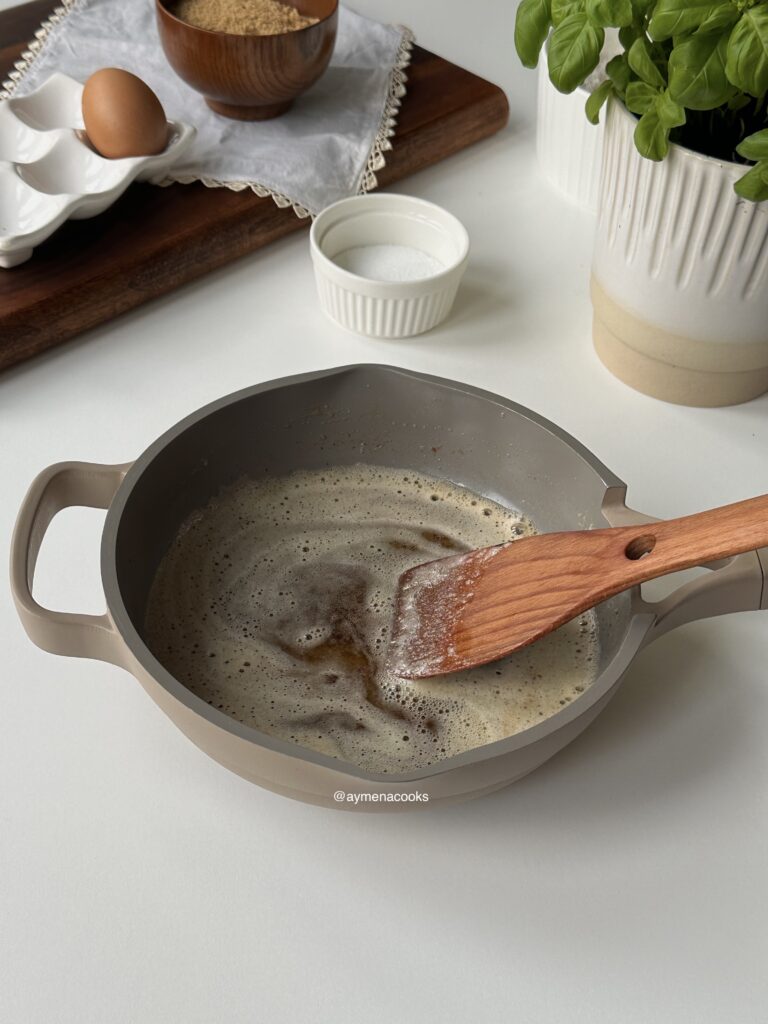
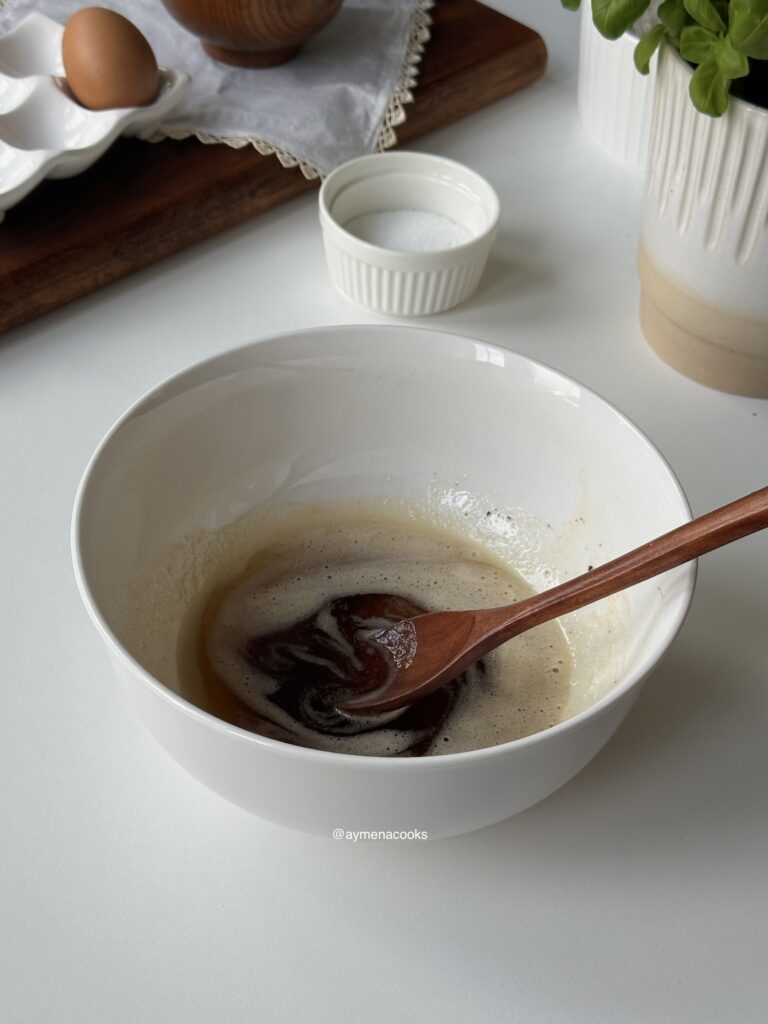
Place the butter in a light-colored saucepan over medium heat. Stir as it melts, then continue cooking as it foams and small flecks appear on the bottom of the pan. Watch the flecks closely: once they are golden brown and the butter smells toasted, remove the pan from the heat.
Immediately pour the browned butter into a heatproof mixing bowl, scraping in the golden milk solids. Once you transfer the browned butter to a mixing bowl, Let it cool for about ten to fifteen minutes before continuing.
2. Make the Espresso Cookie Dough
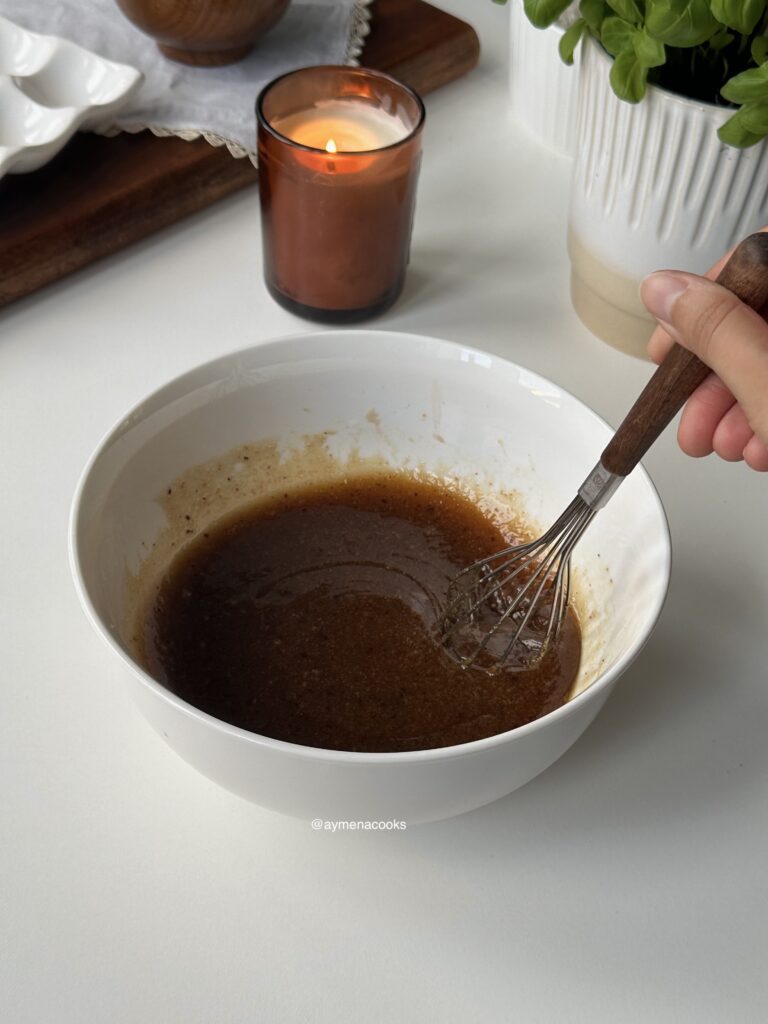
Whisk the light brown sugar and granulated sugar into the cooled brown butter. Add the egg, heavy cream and vanilla extract, then whisk until the mixture is combined.
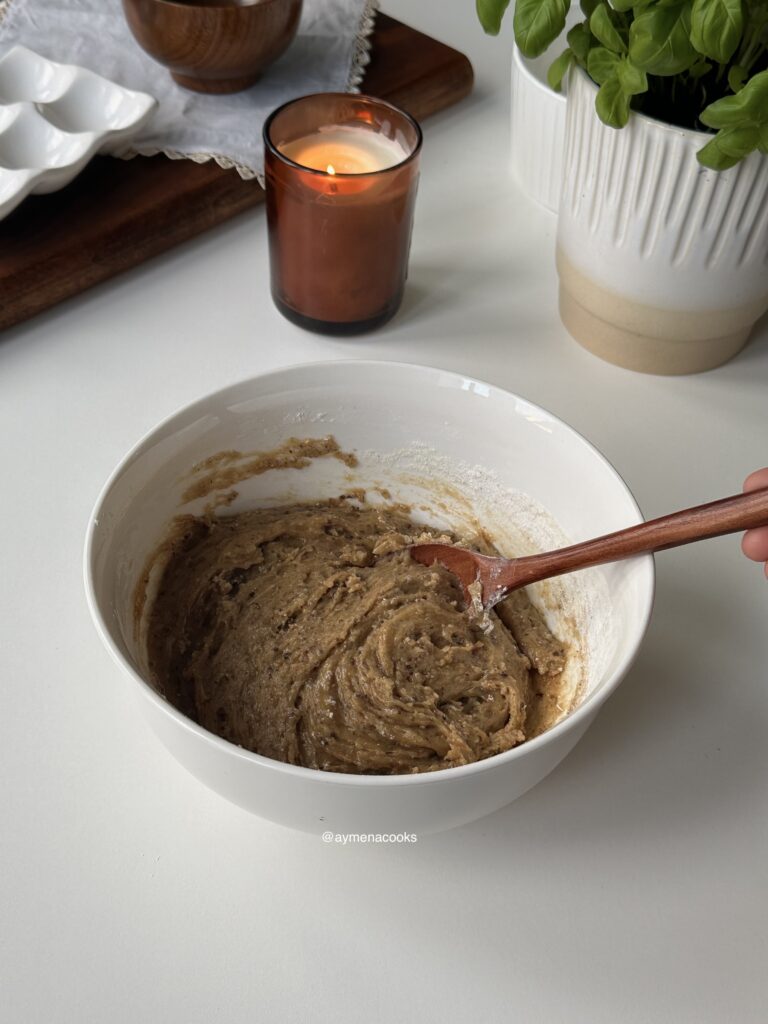
In a separate bowl, whisk together the flour, instant espresso powder, baking soda, baking powder and salt. Break up any visible espresso or flour lumps, then add the dry ingredients to the wet mixture.
Fold with a spatula, scraping around the sides and bottom of the bowl, until no dry flour remains. Stop mixing once the dough comes together.
3. Chill and Portion the Dough
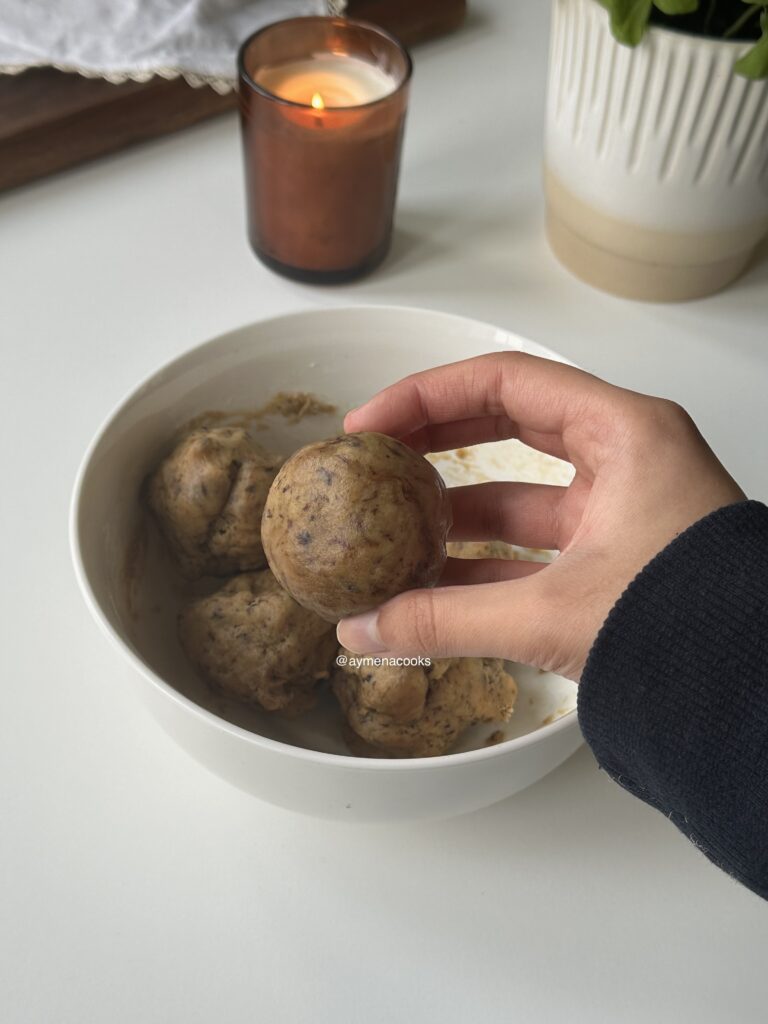
Cover the bowl and refrigerate the dough for about 30 minutes to an hour, until it’s firm enough to portion and roll. It should hold its shape as you handle it. If it still feels very soft, give it more time in the fridge.
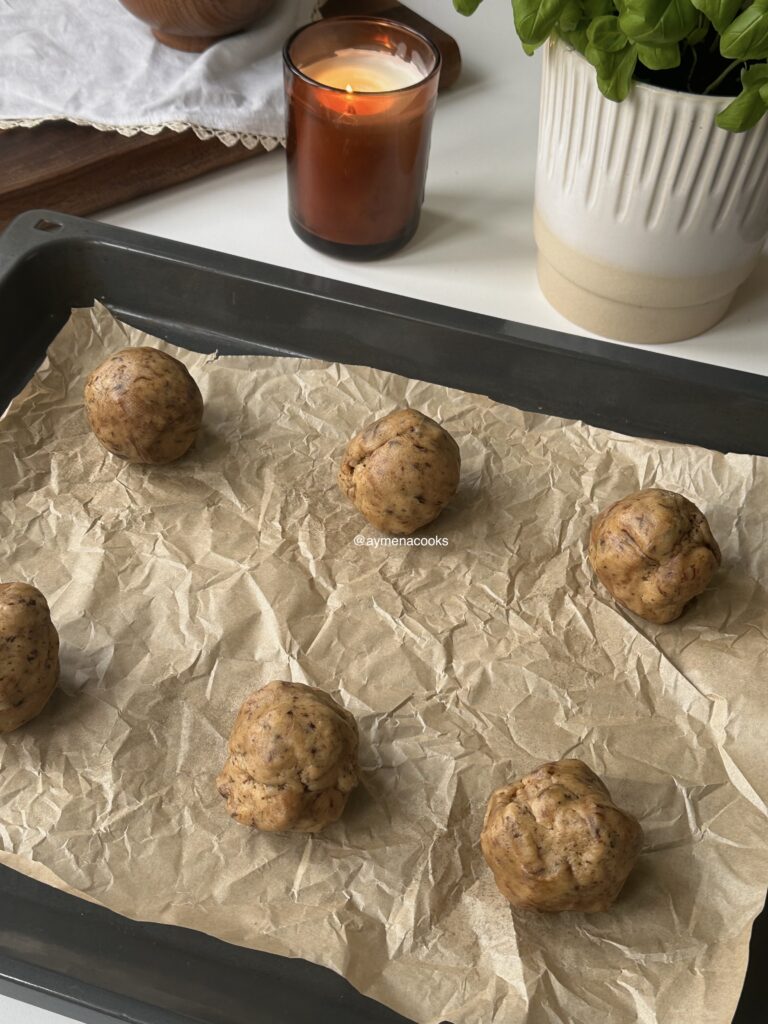
While the dough finishes chilling, preheat the oven and line a baking sheet with parchment paper. Divide the dough into equal portions and roll them into balls. A scale is useful for making the portions even.
Arrange the dough balls on the lined baking sheet with plenty of room to spread. If the cookies would crowd the tray, bake in batches and keep the remaining dough in the fridge.
4. Bake and Cool Completely
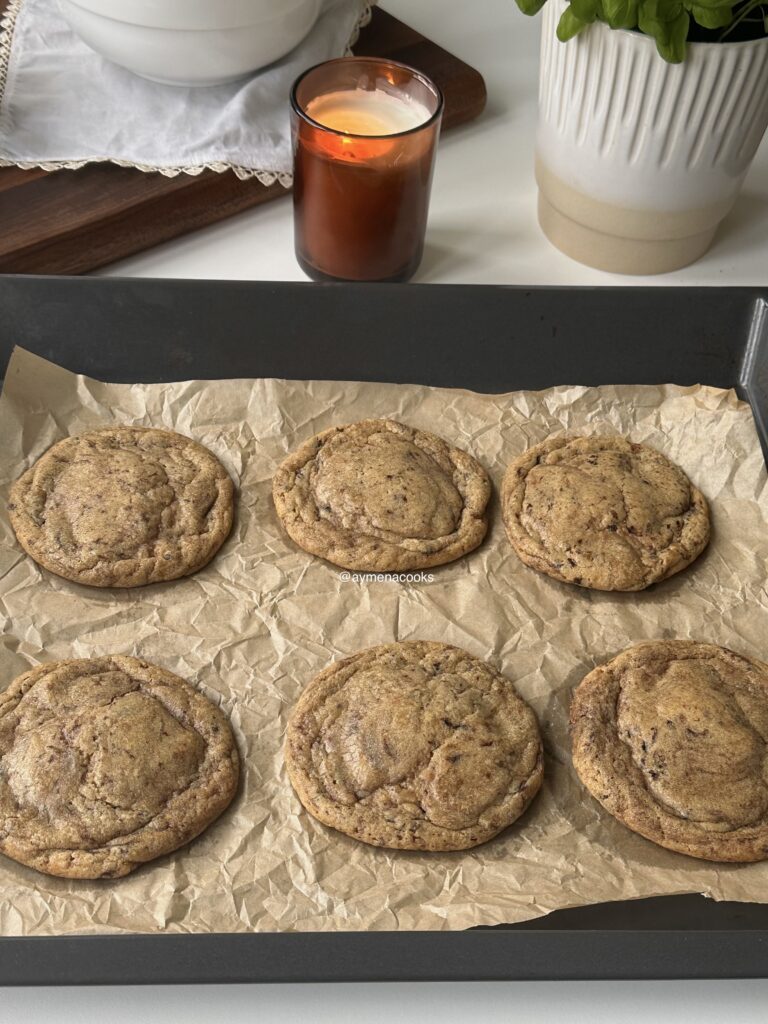
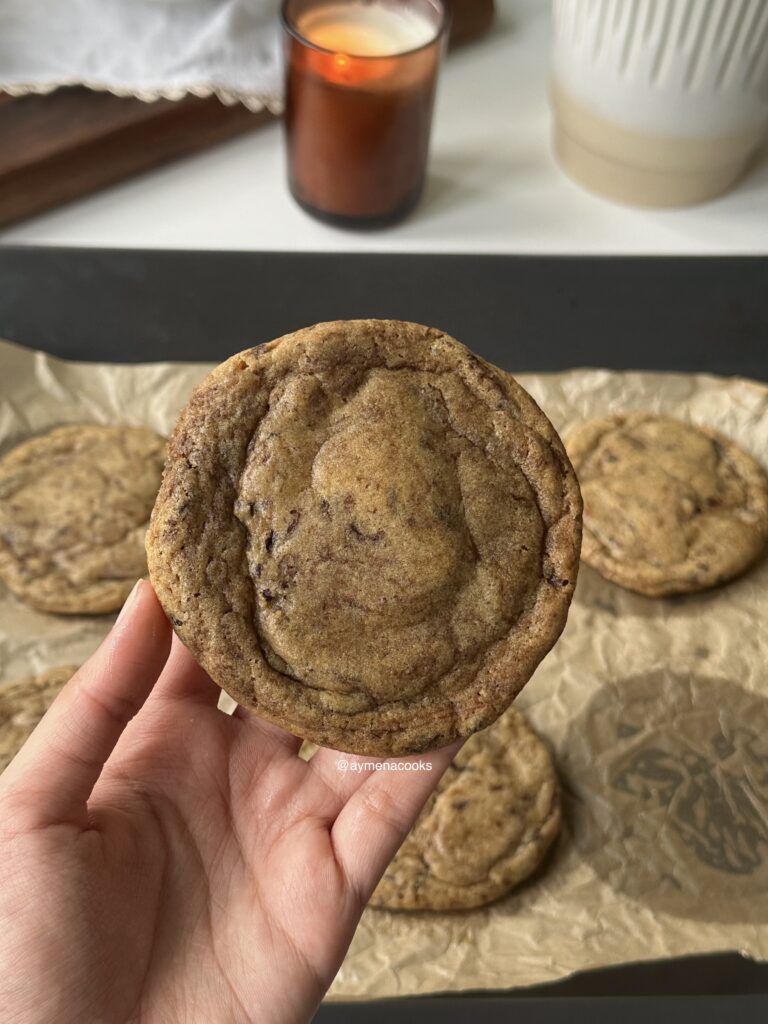
Bake the cookies until the edges have set and the centers are still soft and slightly underbaked, but no longer look like wet dough. The espresso makes the dough darker, so use those texture cues as well as color.
Leave the cookies on the baking sheet to cool until they’re firm enough to lift without breaking. Carefully transfer them to a wire rack and let them cool completely, including underneath. Wait until there’s no warmth left before adding the frosting.
5. Make the Mascarpone Frosting
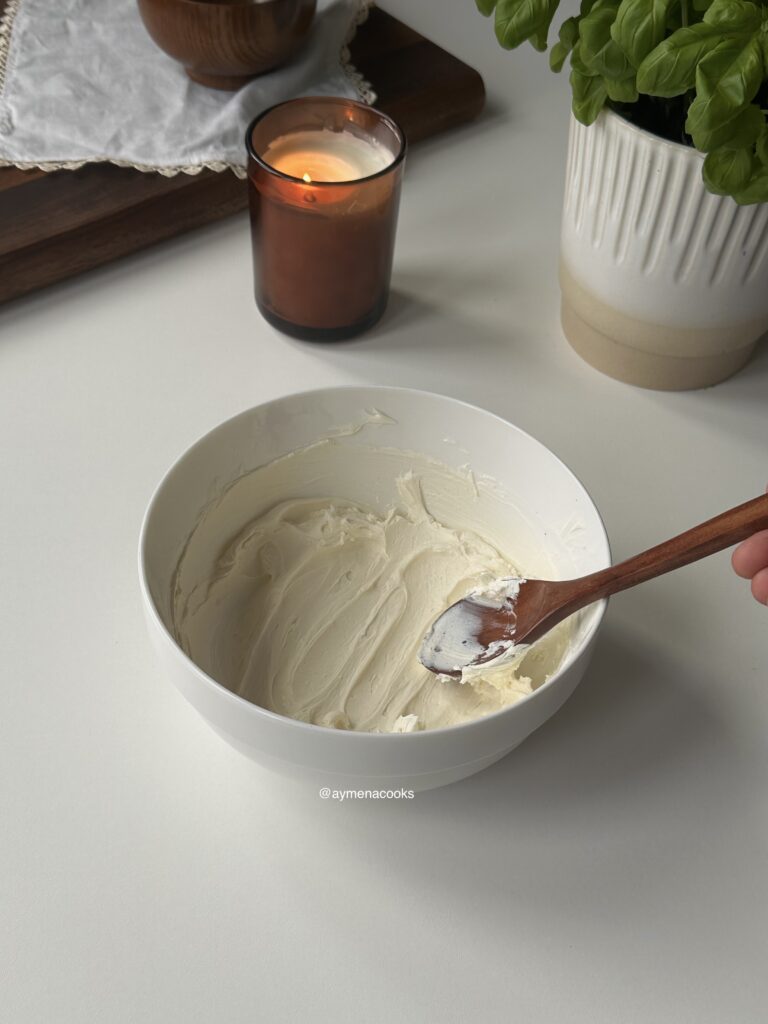
When the cookies are completely cool, make the mascarpone frosting. Add cold mascarpone to a mixing bowl and beat with a mixer or whisk until it’s completely smooth.
Then, add cold heavy cream, powdered sugar and vanilla. Beat everything together until the cream thickens up and the mixture is completely combined. Pause to check the texture: it should hold its shape on a spoon while remaining smooth enough to spread. The peak should curl slightly at the tip. Stop as soon as it reaches that stage rather than continuing until it looks stiff or grainy.
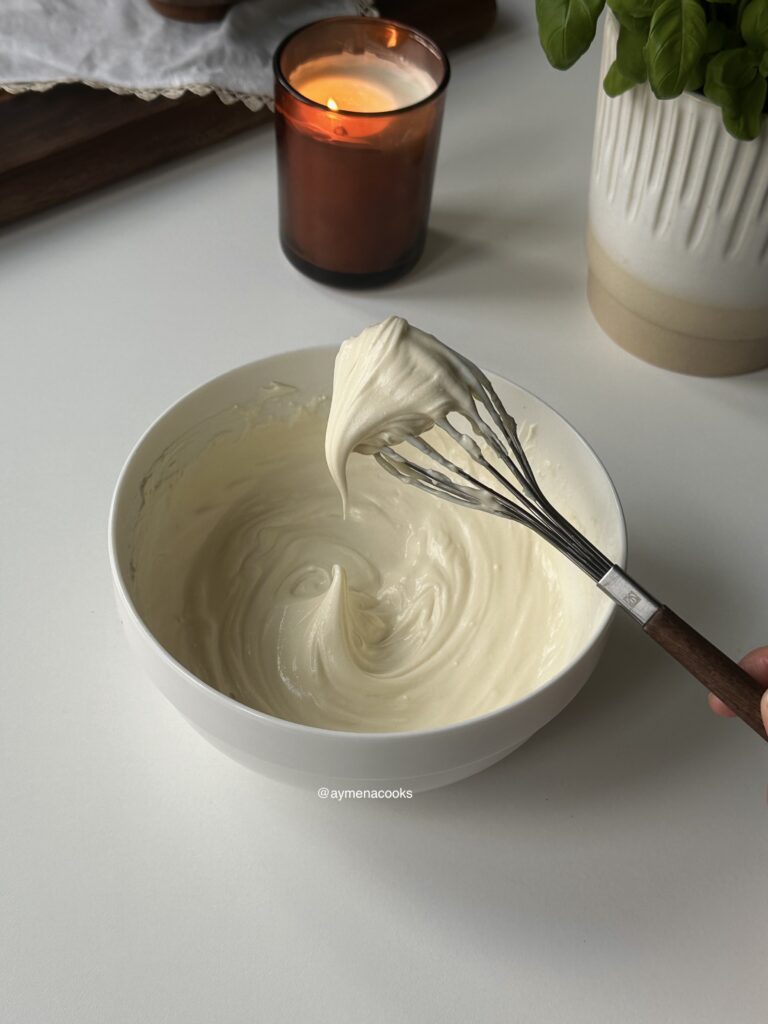
6. Frost and Dust with Cocoa
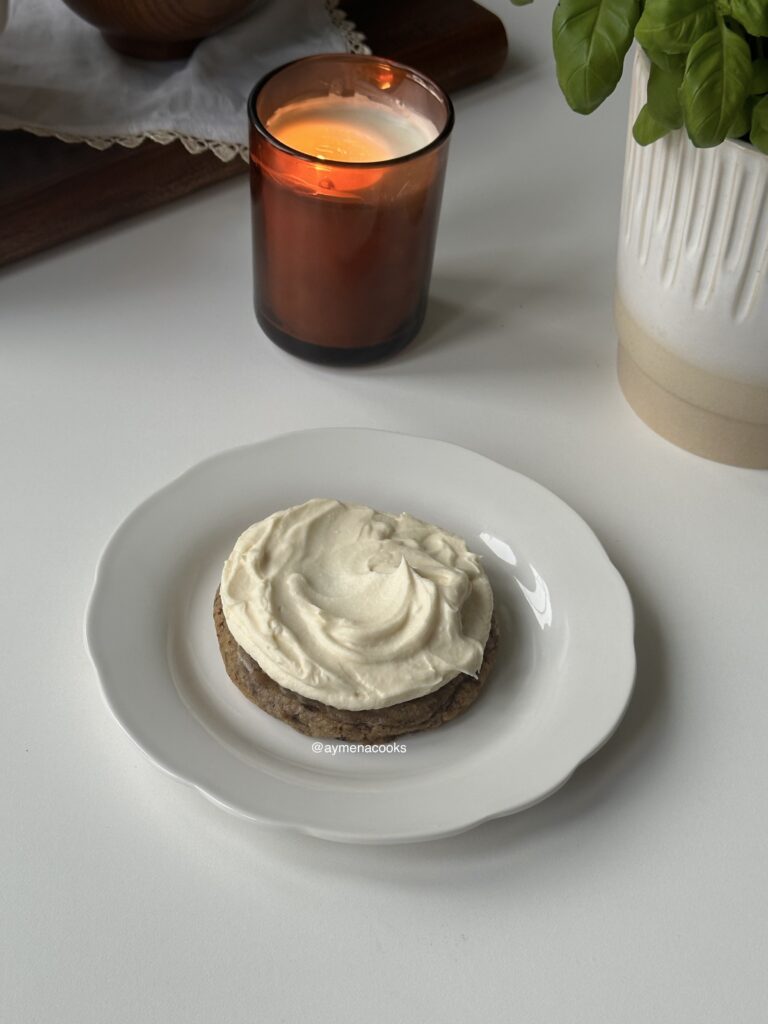
Divide the mascarpone frosting between the cooled cookies. Use the back of a spoon or a small offset spatula to spread it over the tops, leaving a little of the cookie visible around the edges.
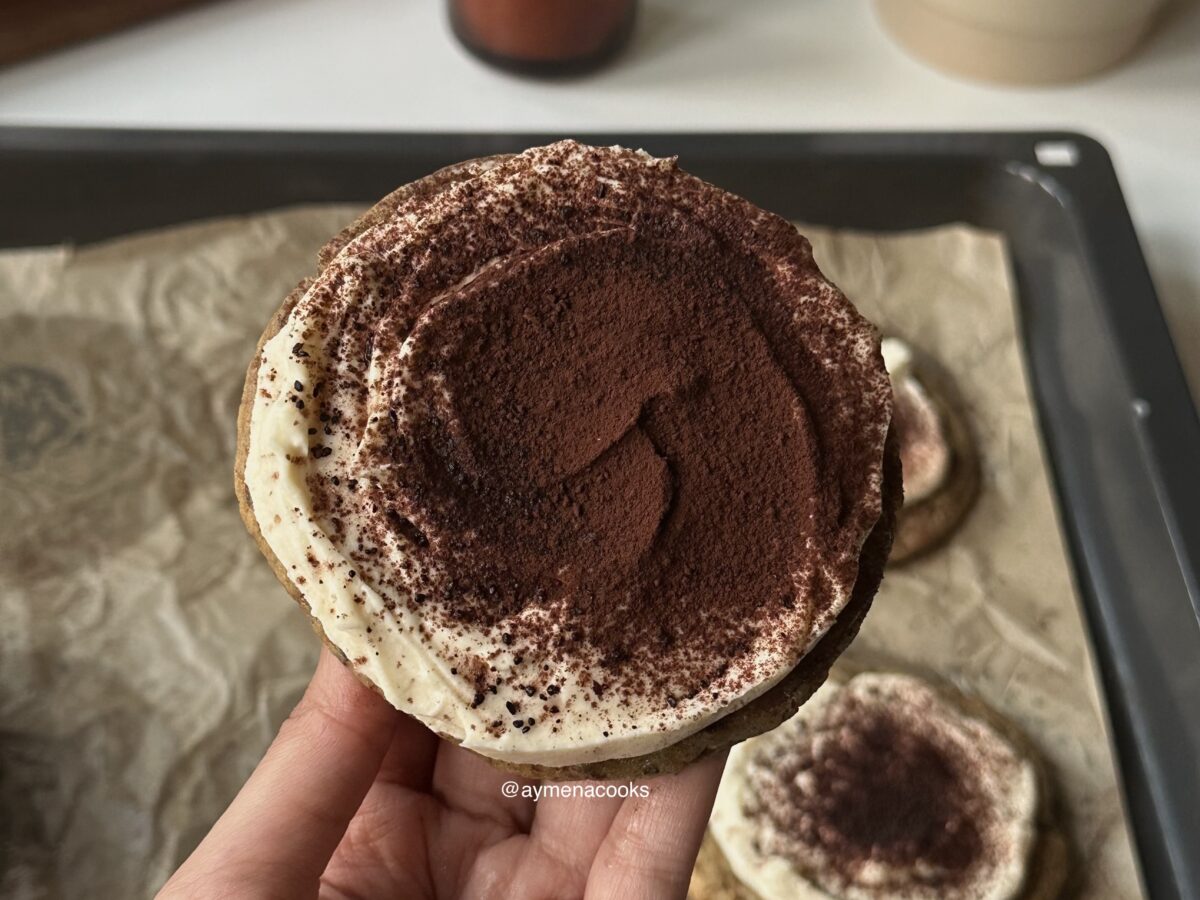
Sift a light layer of cocoa powder over the frosting and serve the cookies.
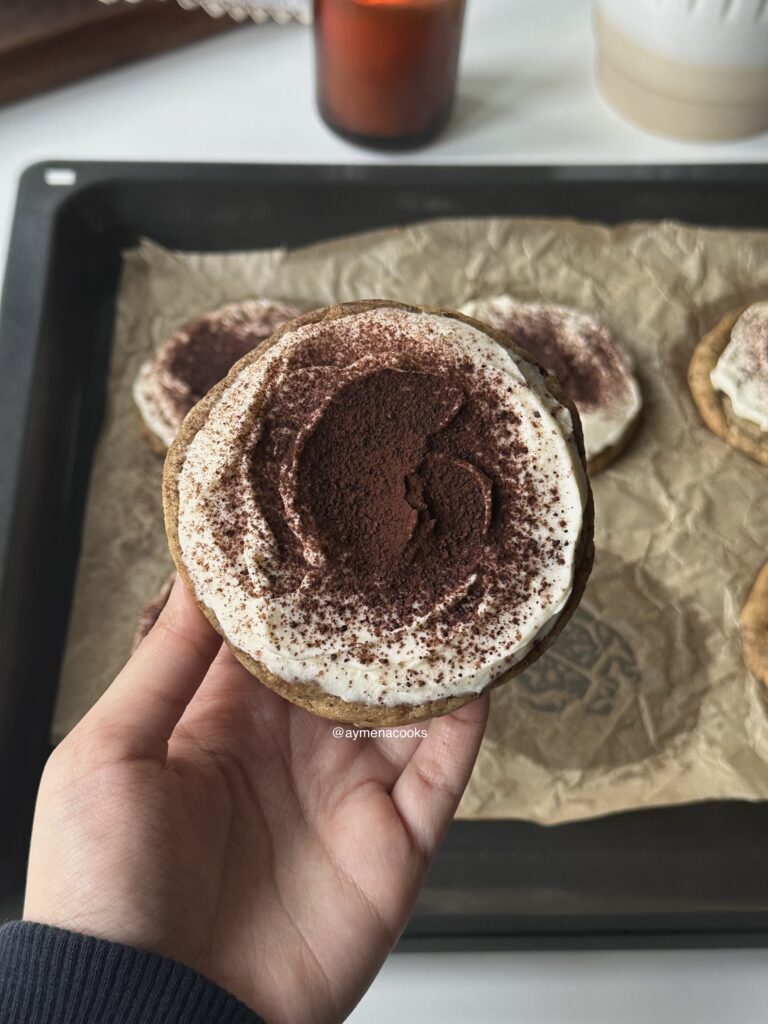
Tips for the Best Tiramisu Cookies
- Weigh the butter before browning. The ingredient weight refers to the butter before it goes into the pan.
- Let the butter cool before mixing. Hot butter will warm the dough and be too hot for the egg. It should still be liquid, but only just warm. I’d recommend letting it cool for about 10-15 minutes.
- Don’t skip the chilling time. This recipe makes quite a loose, sticky dough because of the browned butter, so you’ll need to let it chill in the fridge for a good 30 minutes to an hour so that the dough firms up and becomes easier to handle and shape.
- Judge the bake by the edges and centers. The cookies should be set enough to finish firming up on the tray. Waiting until they feel firm all the way through can dry them out.
- Use a cookie scoop or weigh out the cookie dough balls. This will allow all the cookies to be equal and consistent in size. This recipe makes 6 cookies, each weighing about 88g (about 3.1 oz).
- Remove the cookies from the oven while they’re still slightly underbaked. I like to take the cookies out of the oven when the edges are set, but the centers are still slightly soft and underdone as they’ll continue to cook as they cool once they’re out of the oven. Let them cool on the baking sheet for a good 15 minutes before trying to pick them up. they should still be soft and chewy but you’ll be able to actually hold them without them falling apart.
- Let the cookies cool completely before frosting them. Adding the whipped mascarpone frosting to warm cookies will just make the frosting melt, so make sure the cookies are completely cool before you start decorating them.
Serving Ideas
Serve these cookies as individual desserts with espresso, a latte or a glass of milk. Spoon the mascarpone into a loose swirl and add a light dusting of cocoa just before serving. Arrange them in a single layer on a plate or platter to keep the frosting intact.
Make Ahead and Storage
Preparing the Components Ahead
For serving later, keep the completely cooled, unfrosted cookie bases in an airtight container at room temperature and the mascarpone frosting covered in a separate container in the fridge. Spread the cream over the cookies and dust the cocoa powder right before serving. Keeping the components separate also makes it easier to transport the bases without damaging the topping.
Storing Leftovers
Keep the frosted tiramisu cookies in a covered container in the fridge because the topping contains mascarpone and fresh cream. Arrange them in a single layer with some space between them.
Frequently Asked Questions
Can I Use Brewed Coffee Instead of Espresso Powder?
This recipe requires you to Whisk the instant espresso powder directly into the flour and other dry ingredients. Adding brewed coffee would introduce extra liquid that would impact the texture of the cookies, so it can’t be used as a direct swap without changing the recipe. Using dry instant espresso powder is best for this recipe.
Can I Skip the Chill Time?
I would really recommend chilling the dough for the stated time, and not skipping this step. The dough is made with liquid brown butter, so it’s initially quite loose and sticky. Chilling the dough helps it become easier to handle and shape and keeps it from spreading too quickly in the oven. Follow the timing in the recipe card and make sure the dough feels firm enough to shape into balls.
Why Did My Cookies Spread Too Much?
The dough may have been too warm when it went into the oven, particularly if the butter was still hot when you mixed it. Make sure the dough is chilled and Check that you weighed the flour accurately too.
Why Is My Mascarpone Frosting Runny?
The ingredients may have become too warm, or the cream may need a little more whipping. If it’s smooth but too soft, chill the bowl briefly and check it again before whisking further. If the mixture looks grainy or separated, continuing to beat it can make that worse. Start with cold mascarpone and cream, and stop mixing once the frosting starts to hold its shape and has a tip that curls over slightly when you lift the beaters or whisk out of the cream.
Can I Make Smaller Cookies?
This recipe makes 6 large cookies, but you can make smaller cookies if you like. Smaller cookies will take less time to bake, so start checking earlier and use the same cues: set edges and soft, slightly underdone centers that no longer look wet. Do not automatically use the full baking time for smaller cookies.
More Dessert Recipes
If you like the coffee and mascarpone combination, try my tiramisu brownies, with a brownie base and coffee-soaked ladyfingers, or my tiramisu cake for a layered chocolate cake.
For another chewy cookie recipe using this brown butter base, try my brown butter snickerdoodles.
Tiramisu Cookies
Brown butter tiramisu cookies with espresso in the dough, whipped mascarpone frosting and a light dusting of cocoa powder.
- 30 minprep
- 15 mincook
- total
- 6servings
ingredients
16 ingredientsEspresso cookie dough
- 125 g unsalted butter (½ cup + 1 tbsp)
- 100 g light brown sugar (½ cup, packed)
- 50 g granulated sugar (3 tbsp + 2 tsp)
- 1 large egg, room temperature
- 1 tsp heavy cream or double cream
- 1 tsp vanilla extract or vanilla paste
- 220 g all-purpose flour or plain flour (1 cup + ¼ cup + 2 tbsp)
- 2 tbsp instant espresso powder
- ½ tsp baking soda
- ½ tsp baking powder
- ¼ tsp salt
Mascarpone frosting
- 150g mascarpone, cold (½ cup + 2 tbsp)
- 125ml heavy cream or double cream, cold (½ cup)
- 40 g powdered sugar or icing sugar (¼ cup)
- 1 tsp vanilla extract
Cocoa topping
- Unsweetened cocoa powder, for dusting
method
13 steps- Brown the butter. In a light-colored saucepan, add unsalted butter and keep stirring it over medium heat until it melts. It will start to sizzle and foam. When the milk solids on the bottom turn golden brown and smell toasted, take the pan off the heat. Immediately pour the butter into a heatproof mixing bowl, making sure to get all the toasted milk solids from the pan into the bowl. Let the browned butter cool for about 10-15 minutes.
- Mix the wet ingredients. Whisk the light brown sugar and granulated sugar into the cooled brown butter until combined. Add the egg, heavy cream and vanilla. Whisk until combined.
- Mix the dry ingredients. In a separate bowl, whisk together the flour, instant espresso powder, baking soda, baking powder and salt.
- Add the dry ingredients to the wet mixture and fold with a spoon or spatula, scraping the bowl, until no dry flour remains. Stop mixing once combined.
- Chill the dough. Cover and refrigerate the dough for 30 minutes to 1 hour, until the dough is firm enough to portion and roll. If the dough is still very soft after 30 minutes, give it the rest of the hour.
- Prepare the oven and tray. Towards the end of the chill time, preheat the oven to 180°C (350°F) for 10-15 minutes. Line a baking sheet with parchment paper.
- Portion the cookies. Use a cookie scoop or divide the dough into 6 equal portions and roll into balls. Arrange on the lined baking sheet with plenty of room to spread. Bake in batches if needed.
- Bake. Bake for 12–15 minutes, checking at 12 minutes. The edges should be set and the centers should still be soft but no longer look like wet dough.
- Cool completely. Leave the cookies on the baking sheet for about 15 minutes, until firm enough to lift. Move them to a wire rack and cool completely, including underneath, before frosting.
- Remove from the oven and let the cookies cool on the baking sheet for about 15 minutes, until firm enough to lift. Move them to a wire rack and cool completely before frosting.
- Make the frosting. Add cold mascarpone to a mixing bowl and beat with a mixer or whisk until it's completely smooth.
- Then, add cold heavy cream, powdered sugar and vanilla. Beat everything together until the cream thickens up and the mixture is completely combined. Pause to check the texture: it should hold its shape on a spoon while remaining smooth enough to spread. It should curl slightly at the tip when you lift the beaters out of the cream.
- Divide the frosting between the completely cooled cookies and spread over the tops with a spoon or small offset spatula. Lightly dust each cookie with unsweetened cocoa powder just before serving.
notes
- Butter weight: weigh out 125g (½ cup + 1 tbsp) before browning, then use the resulting butter and golden milk solids. Don't measure out 125 g of browned butter afterward.
- If using salted butter, leave out the extra salt in the dough.
- Baking times will vary depending on your oven as well as the size of your cookies. If you make smaller cookies, make sure to reduce baking times so that the cookies aren't over baked. They should be slightly underdone and soft when you take them out, as they'll continue to firm up as they cool.
tools
13 tools- Kitchen scale or measuring cups
- Measuring spoons
- Light-colored saucepan for browning the butter
- Heatproof mixing bowl
- Mixing bowl for the dry ingredients
- Whisk and spoon or silicone spatula
- Baking sheet
- Parchment paper
- Wire cooling rack
- Mixing bowl for the mascarpone frosting
- Electric mixer
- Spoon or small offset spatula for frosting
- Fine sieve for the cocoa powder
comments
Questions, tips, and kind notes are welcome.