
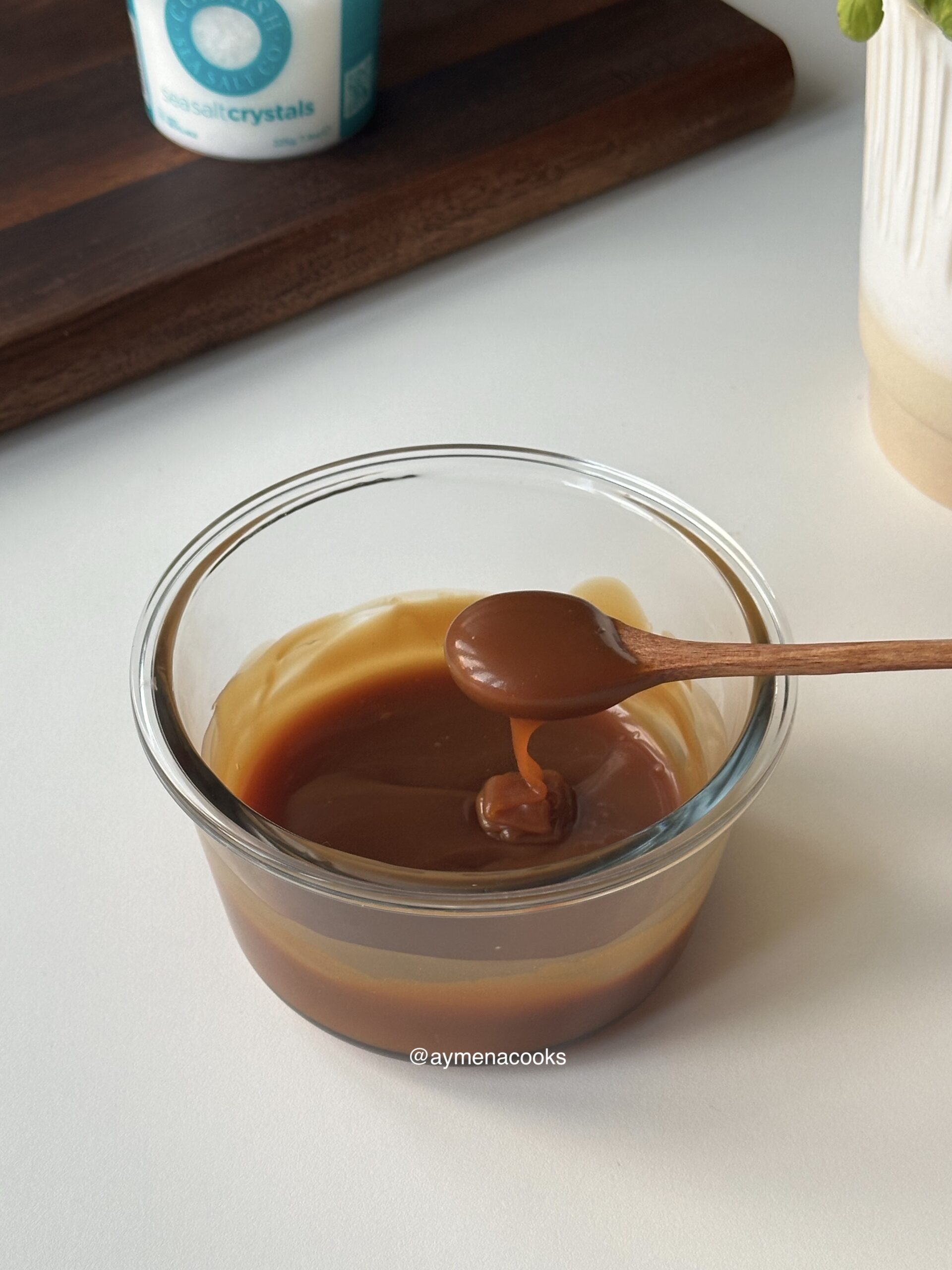
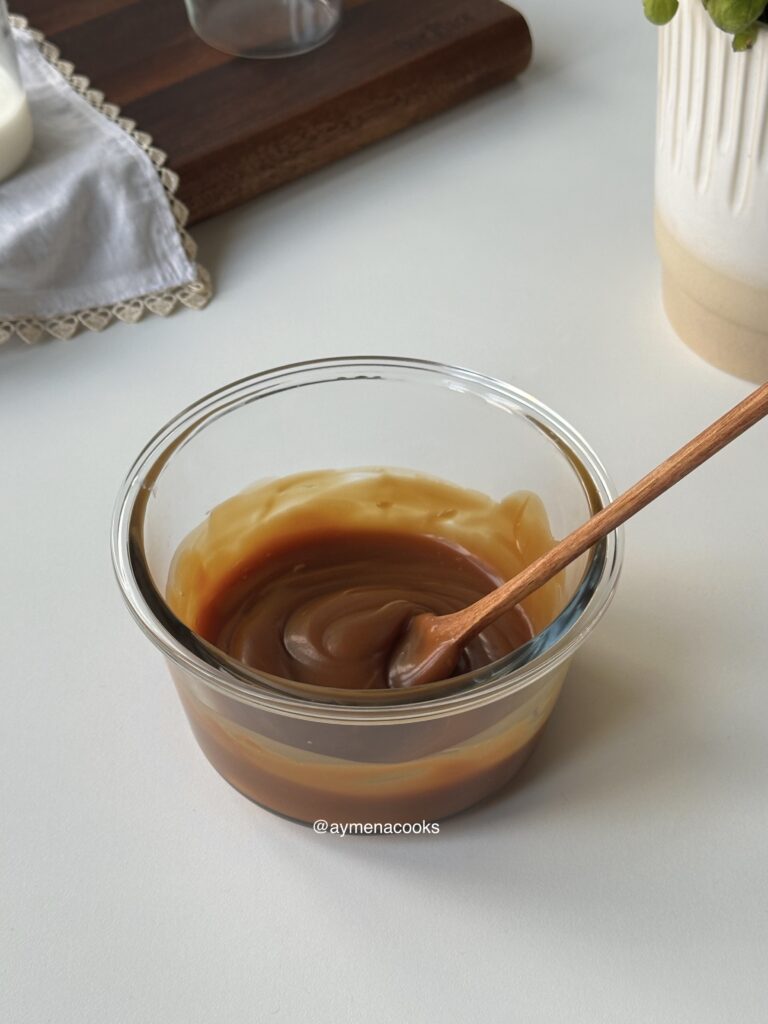
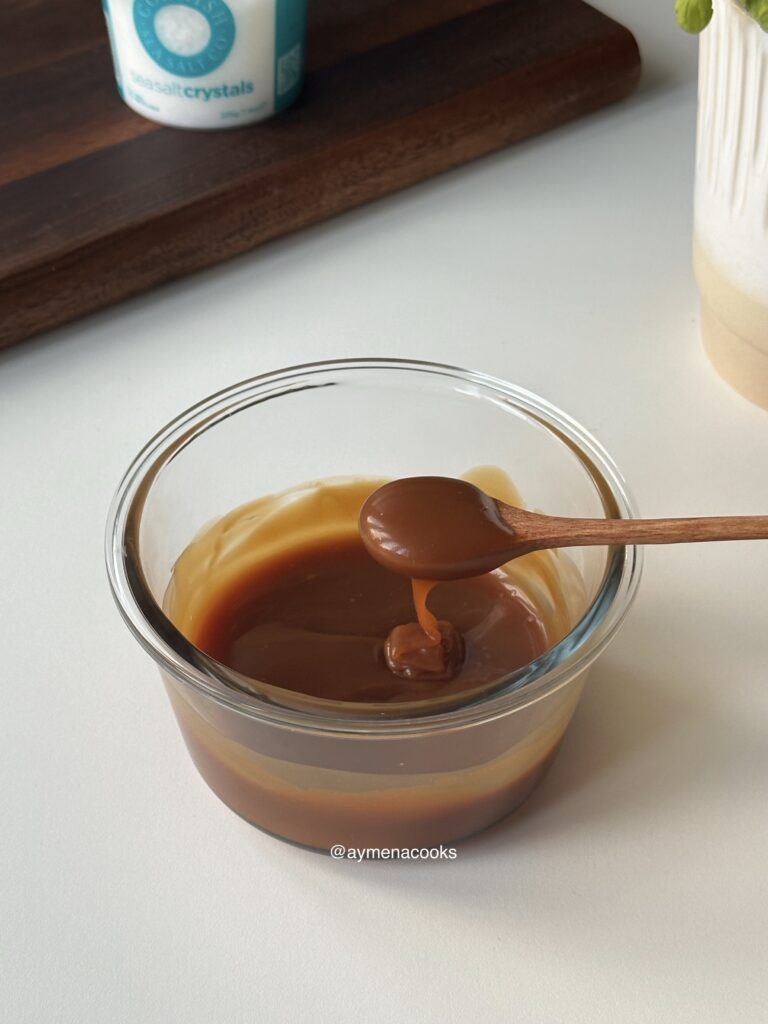
deep amber caramel, plenty of butter and a smooth ribbon that thickens as it cools.
A note from my kitchen
I first made this caramel sauce for my caramel frappe, but it quickly became one of those component recipes that was useful enough to deserve its own page.
I wanted a sauce with a deep and rich caramel flavor that could be used in coffees and drinks, but also over desserts like brownies and ice cream. To make this, the sugar is melted until it reaches a deep amber color, then butter and heavy cream turn it into a glossy sauce that stays smooth enough for coffee and drizzling.
I kept the salt fairly restrained here so that the sauce would work in both drinks and desserts. You can taste it once it has cooled and add a little more salt if you want a more obvious salted caramel taste.
What Is Caramel Sauce?
Caramel sauce is made by cooking sugar until it melts and develops a toasted amber flavor, then carefully whisking in butter and heavy cream.
This is a dry caramel method, which means the sugar melts on its own without water. Once the dairy is added, the hard caramel becomes a smooth sauce tha’s thin while hot and noticeably thicker once cooled.
Vanilla rounds out the flavor and a small amount of salt keeps the sweetness balanced. The finished sauce can be used in coffee, over ice cream, with brownies and cheesecakes, or anywhere you would normally use a dessert sauce.
Why You’ll Love This Recipe
- It has a rich and deep caramel flavor. Melting the sugar to a rich amber color gives the sauce more depth than a pale, simply sweet topping.
- The texture stays smooth and pourable. It works as both a coffee sauce and a dessert drizzle, then thickens into a richer caramel as it cools.
- It makes a useful small batch. The recipe makes enough for a few drinks or desserts without leaving a large jar in the fridge for weeks.
- No thermometer is required. Color and texture are more useful than a precise temperature for this method.
- It can become salted caramel. The base recipe uses only enough salt to balance the sweetness, so you can add more gradually for a stronger sweet-salty flavor.
- It’s naturally corn-syrup free. The sauce uses granulated sugar, butter and cream without needing bottled caramel or corn syrup.
What Does It Taste Like?
The sauce tastes buttery, creamy and deeply caramelized, with vanilla at the end and just enough salt to stop it from tasting flat.
A well-cooked caramel has a slight toasted bitterness behind the sweetness. That is what keeps it from tasting like melted sugar and makes it especially good in coffee, where it needs enough depth to stand up to espresso or strong brewed coffee.
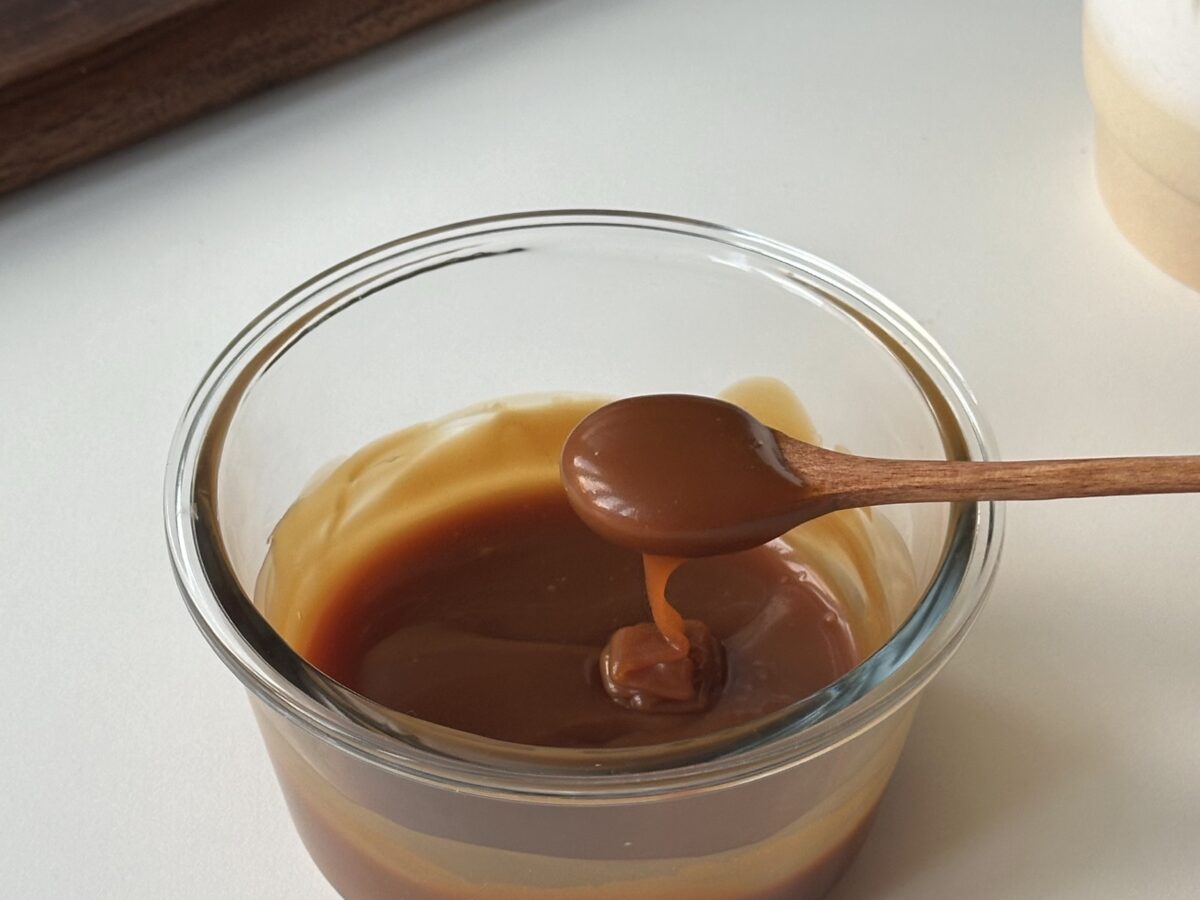
The sauce is thinner and glossier while warm. Once it cools, it becomes thicker, richer and easier to drizzle in a slow ribbon.
ingredient Notes
The exact measurements are in the recipe card further down the page.
Granulated Sugar
Granulated sugar forms the caramel itself. Use plain white sugar rather than brown sugar for this dry-caramel method.
The sugar will clump as it starts to melt, then become a clear amber liquid. Let it reach a deep golden amber color before removing the pan from the heat, but don’t wait until it’s smoking or smells burnt.
Unsalted Butter
Use room-temperature unsalted butter cut into pieces so it can be whisked into the caramel more evenly.
The mixture will bubble vigorously when the butter is added. This is normal, but the steam is extremely hot, so use a long-handled whisk and keep your hands and face away from the pan.
Heavy Cream
Heavy cream gives the sauce its smooth, pourable consistency. Double cream is the closest UK equivalent.
Bring the cream close to room temperature or warm it gently before adding it. Cold cream creates a bigger temperature shock and can make the caramel harden into lumps.
Vanilla and Salt
Vanilla softens the sharper edge of the caramel and gives the finished sauce a fuller dessert flavor.
A few pinches of fine salt balance the sweetness without turning this into a strongly salted sauce. Taste after the sauce has cooled slightly, then add more only when you want a pronounced salted caramel.
Equipment You’ll Need
You’ll need a clean, dry medium heavy-bottomed saucepan, a long-handled heatproof whisk or silicone spatula, a digital kitchen scale or measuring cups, measuring spoons and a heatproof jar or container.
Use a pan with enough empty space above the sugar. The caramel rises and bubbles dramatically when the butter and cream are added, so a very small saucepan can overflow.
Caramel Safety Before You Start
Melted sugar is much hotter than boiling water and can cause a serious burn. Keep children and pets away from the stove, use a long-handled utensil and never taste the caramel until it has cooled.
Have the butter and cream measured and ready before the sugar melts. Once the caramel reaches the right color, the remaining steps move quickly.
How to Make Homemade Caramel Sauce
The full ingredient quantities are in the recipe card. The stages below explain the exact method and the color and texture changes to look for.
1. Prepare the Butter and Cream
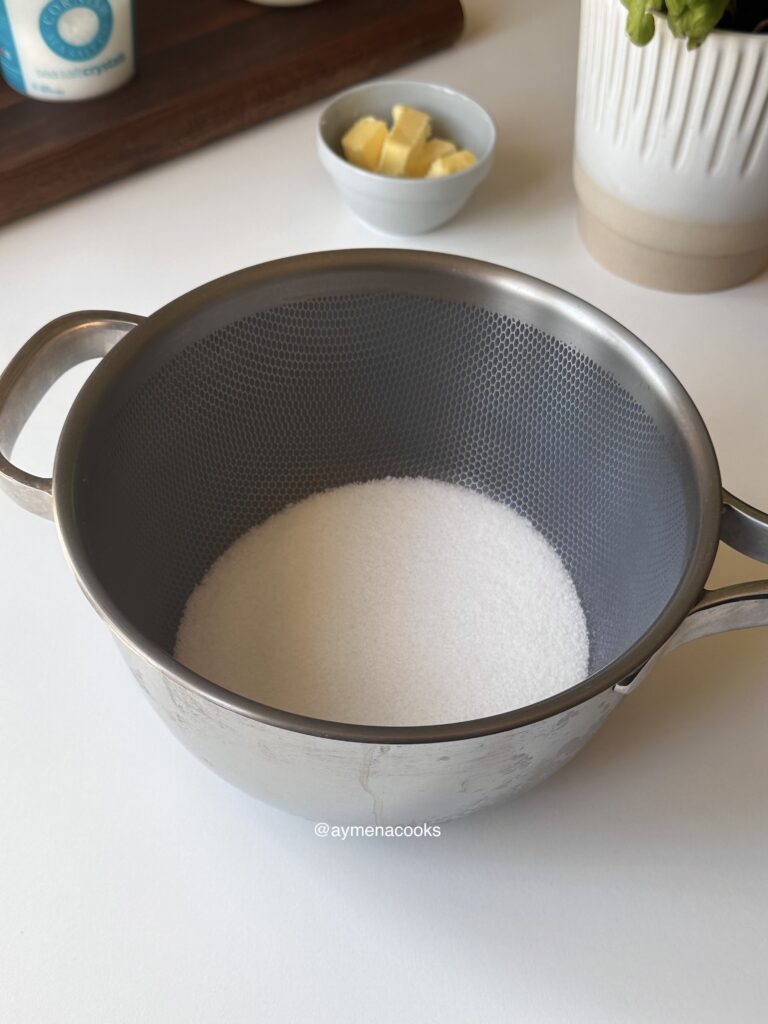
Cut the room-temperature butter into small pieces and measure out the heavy cream.
Bring the cream to room temperature or warm it very gently. Keep both ingredients beside the stove so they are ready as soon as the sugar reaches a deep amber color.
2. Melt the Sugar
Add the granulated sugar to a clean, dry saucepan and place it over medium heat.
Let the sugar begin melting around the edges. Do not stir it with a spoon. Swirl the pan gently from time to time so the melted sugar moves over the dry areas.
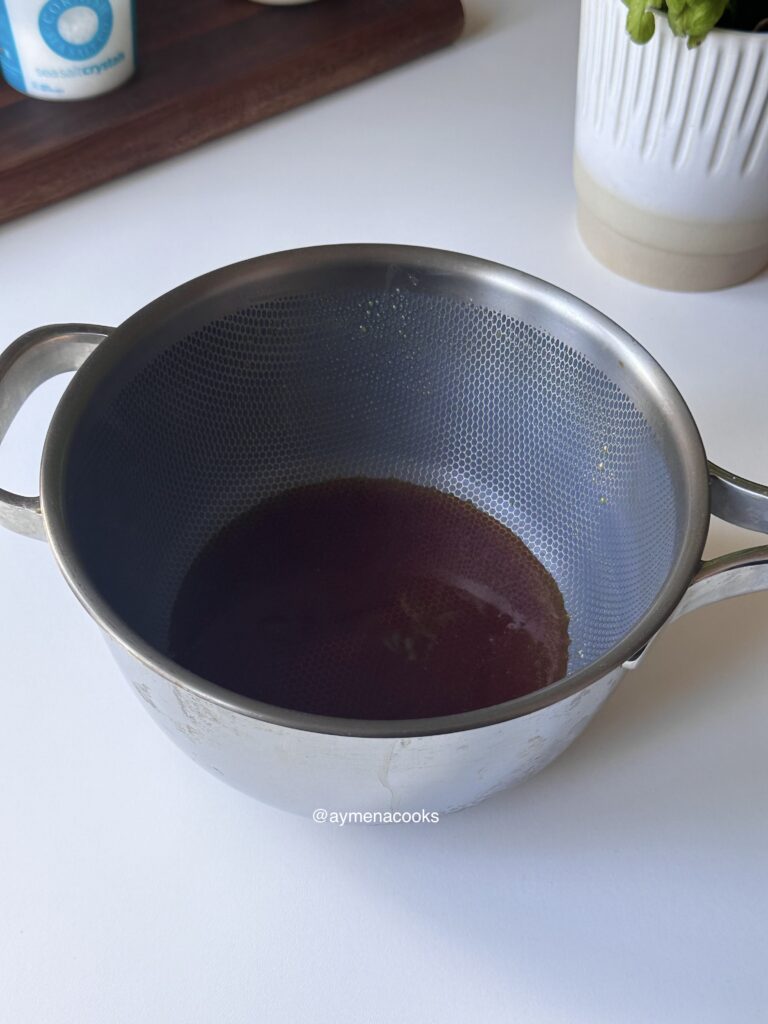
The sugar will clump before it fully melts. Continue heating and swirling until it becomes a smooth golden-amber liquid with no dry crystals remaining.
3. Add the Butter
Once the caramel reaches a deep amber color, remove the pan from the heat.
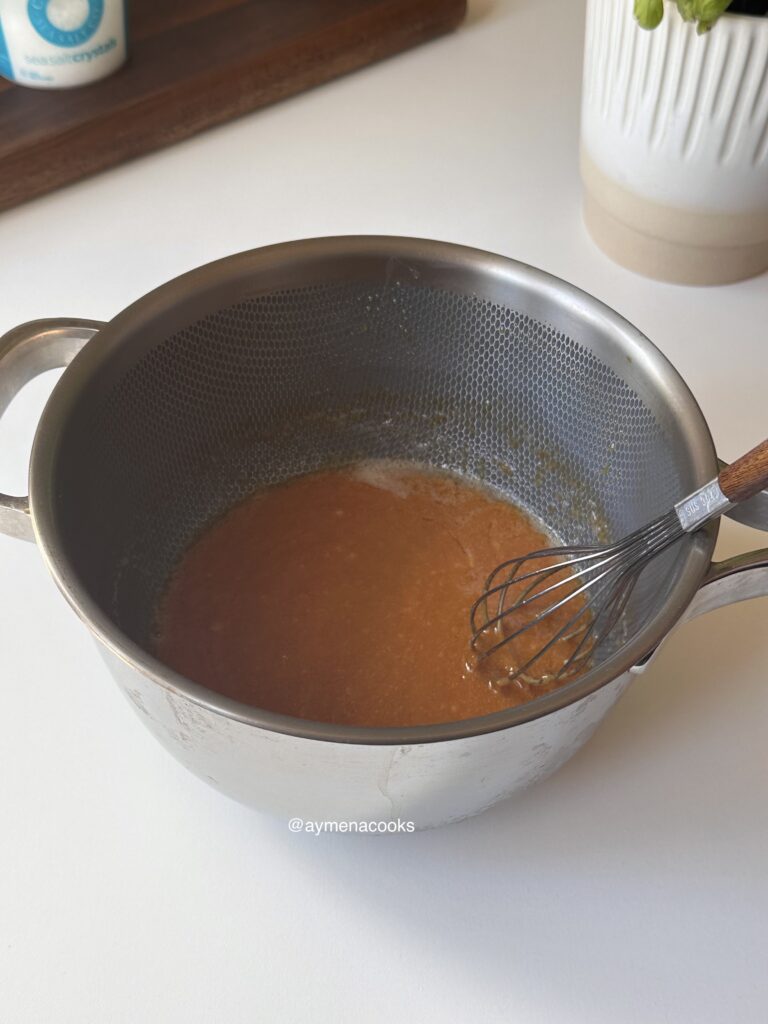
Carefully add the butter. The caramel will bubble vigorously and release very hot steam. Whisk continuously until the butter is fully incorporated and the mixture looks smooth.
4. Add the Heavy Cream
Slowly pour in the heavy cream while whisking.
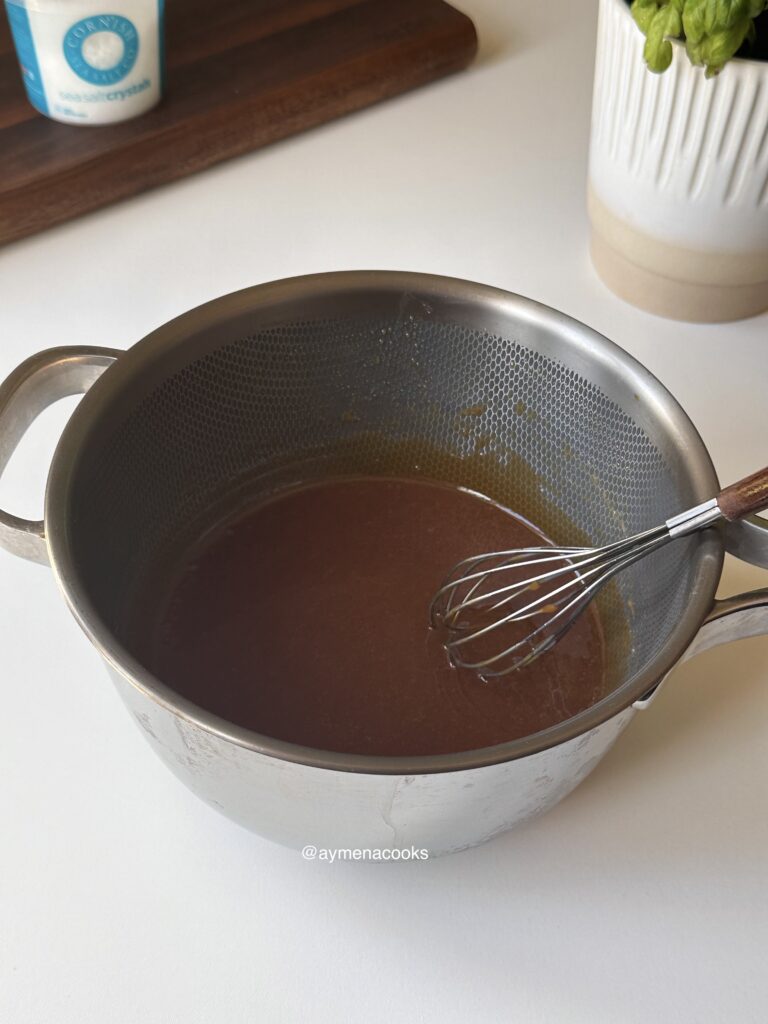
The mixture will bubble again. Keep whisking until the cream is incorporated and the sauce is smooth. If the caramel tightens or a few hard pieces form, return the pan to low heat and stir carefully until they melt back into the sauce.
5. Finish with Vanilla and Salt
Let the bubbling settle, then stir in the vanilla and salt.
Taste only after the caramel has cooled enough to do so safely. Add another small pinch of salt if you want a stronger salted caramel flavor.
6. Transfer and Cool
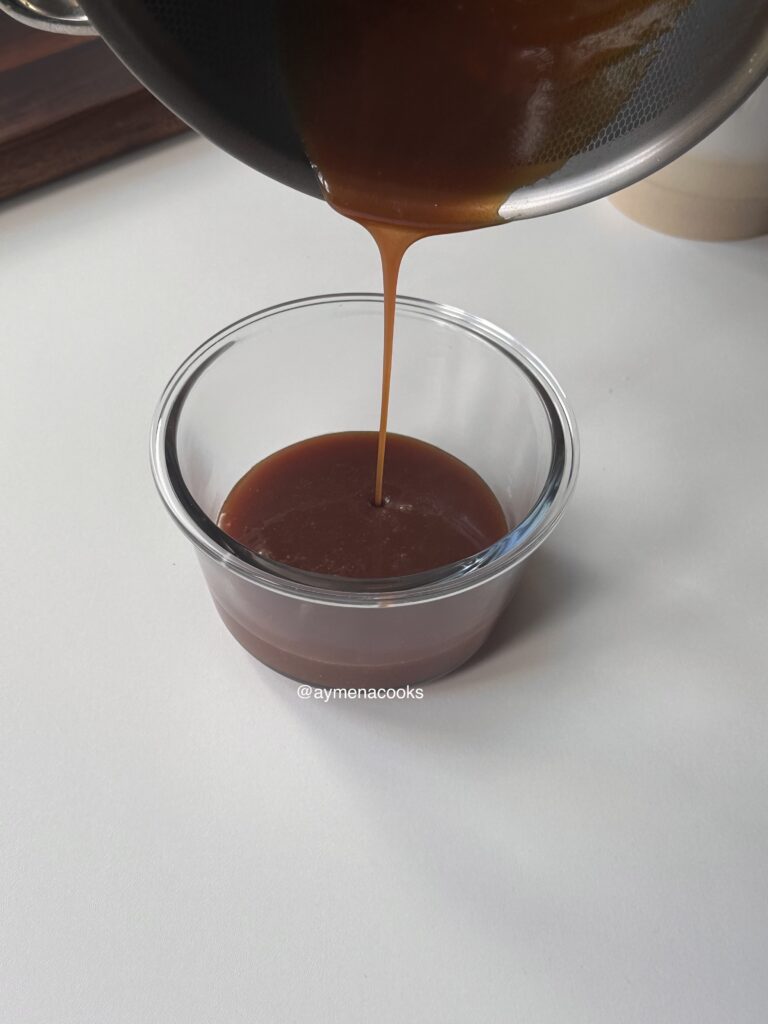
Pour the warm sauce into a clean heatproof jar or container.
It will look fairly loose while hot. Let it cool at room temperature until it becomes thicker but remains easy to pour. The sauce continues thickening in the refrigerator.
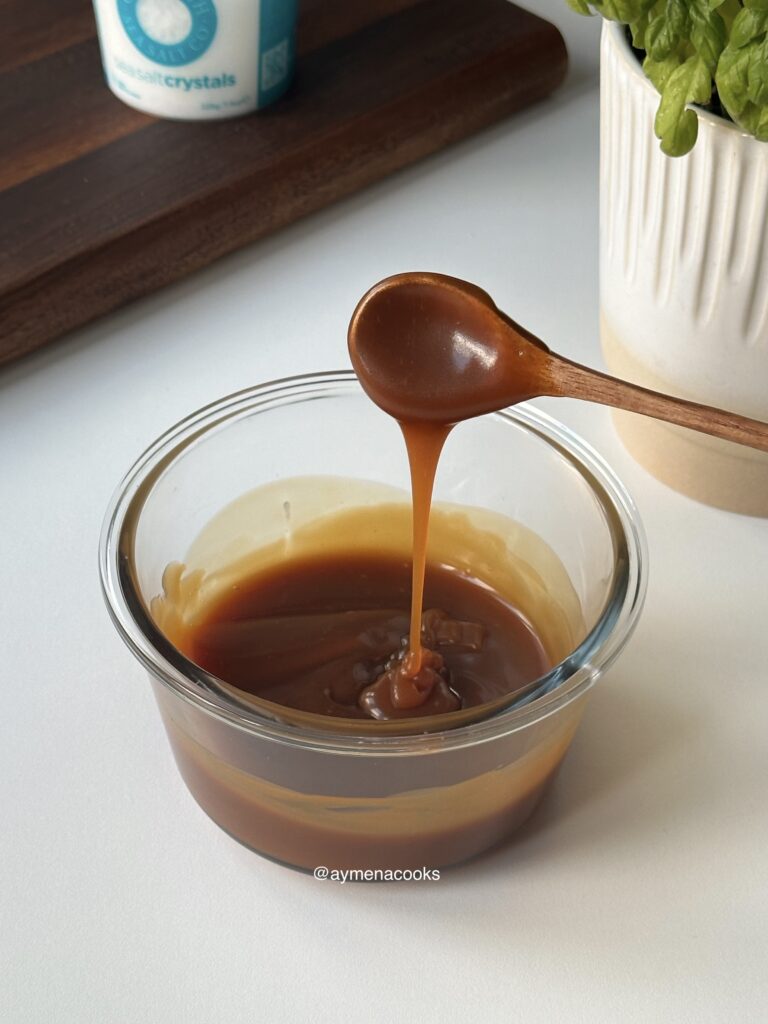
What Color Should Caramel Be?
The best point to add the butter is when the melted sugar is a deep golden amber, similar to dark honey.
A pale caramel will mainly taste sweet and will not have as much depth. A very dark brown caramel may taste bitter or burnt, especially if it begins smoking.
The sugar continues cooking from the heat of the pan even after you remove it from the stove, so have the butter ready and add it immediately once the color is right.
How to Use Caramel Sauce
In Coffee and Café-Style Drinks
Stir the sauce into hot espresso or strong coffee before adding cold milk and ice. Warm coffee loosens the caramel and distributes it more evenly than trying to mix it directly into a cold drink.
Use it in my caramel frappe, or keep it ready for homemade caramel lattes, cold foam and other café-style drinks.
Over Brownies, Cheesecake and Ice Cream
Drizzle the sauce over warm brownies, vanilla ice cream or chilled cheesecake.
It works especially well with my brownie cups for two and a bigger batch of it is also used as the top layer of my salted caramel cheesecake brownies.
With Apple and Breakfast Recipes
Use a small amount over pancakes, French toast or warm apple desserts.
A spoonful alongside my apple crumble for two will give the dessert a deeper caramel note, particularly when served with vanilla ice cream.
Tips for the Best Caramel Sauce
- Use a clean, dry pan. Water droplets, grease or sugar crystals around the pan can encourage the caramel to crystallize.
- Measure everything before starting. Once the sugar reaches the right color, you need to add the butter and cream as soon as you can.
- Use room-temperature butter and cream. This reduces the temperature shock and makes seizing less likely.
- Do not stir the dry sugar. Swirl the pan gently instead, especially while there are still dry patches.
- Judge the caramel by color. The exact melting time changes with the pan and stove, but the deep amber color is a reliable cue.
- Add the dairy carefully. The caramel will rise, spit and release very hot steam.
- Return seized caramel to low heat. Gentle heat and steady whisking can melt hard pieces back into the sauce.
- Cool it before judging the consistency. Freshly made caramel is much thinner than cooled caramel. It thickens up as it cools.
- Add extra salt gradually. It’s easy to add more, but impossible to remove it once the sauce tastes too salty.
- Use a larger pan than you think you need. The mixture expands rapidly when the butter and cream go in.
Make Ahead and Storage
Store the cooled caramel sauce in a clean airtight jar in the refrigerator for up to two weeks.
The sauce becomes much thicker when chilled. Let it stand at room temperature briefly or warm it very gently until it becomes pourable again.
Don’t leave the sauce at room temperature for extended periods because it contains butter and cream.
Frequently Asked Questions
Why Did My Caramel Sauce Seize?
The butter or cream may have been much colder than the caramel, or the cream may have been added too quickly. Make sure to use room temperature cream and butter.
If your caramel seizes, return the pan to low heat and whisk carefully until the hard pieces melt back into the sauce. Using room-temperature dairy makes this less likely the next time.
Why Is My Caramel Sauce Grainy?
The sugar may have crystallized before it fully melted.
Start with a clean, dry pan and avoid stirring the sugar with a spoon while it melts. Gently swirl the pan instead and make sure all the sugar has become liquid before adding the butter.
Why Is My Caramel Sauce Too Thin?
Warm caramel sauce is naturally thin and becomes much thicker as it cools.
Let it cool completely before deciding that it needs adjusting. If it remains unusually loose once cool, return it to low heat for a while and stir until slightly reduced.
Why Is My Caramel Sauce Too Thick?
The sauce might simply be cold. Refrigerated caramel becomes much thicker than room-temperature caramel.
Let it stand at room temperature or warm it very gently until it loosens. Avoid overheating it, as the dairy can separate.
Can I Turn This Into Salted Caramel Sauce?
Yes. The base recipe already contains a small amount of salt for balance.
For a stronger salted caramel, add a little more fine salt after the sauce has cooled enough to taste. Add it gradually until the sweet-salty balance is where you want it.
Can I Use Salted Butter?
Yes. Use the same amount of salted butter and reduce or leave out the additional salt at first.
Taste the cooled sauce before adding any more salt.
Can I Use Milk Instead of Heavy Cream?
Heavy cream is the best choice for this recipe because its higher fat content gives the sauce a smooth, stable texture.
Regular milk contains more water and much less fat, so it can make the caramel more likely to seize or separate.
Can I Use Brown Sugar Instead?
Not as a direct substitution in this dry-caramel method.
Brown sugar contains molasses and moisture, so it behaves differently when heated. Use granulated sugar for this recipe.
Does Caramel Sauce Need to Be Refrigerated?
Yes. Because the finished sauce contains butter and cream, keep it covered in the refrigerator.
Let it warm slightly before using when you want a thinner pour.
More Caramel and Chocolate Recipes
Use this sauce in my caramel frappe for caramel flavor in the blended coffee and over the whipped cream.
For a layered dessert, try my salted caramel cheesecake brownies with fudgy brownies, creamy cheesecake and caramel on top.
My salted caramel tiramisu combines coffee-soaked ladyfingers, mascarpone cream and salted caramel.
For a smaller chocolate dessert, serve it with brownie cups for two.
You can also browse the full drink recipes archive for more café-style ideas.
Homemade Caramel Sauce
A rich, glossy caramel sauce with deep buttery flavor and a smooth pourable finish, ideal for coffee, ice cream, brownies and cheesecakes.
- 5 minprep
- 10 mincook
- total
- 4servings
ingredients
5 ingredients- 105g granulated sugar (½ cup)
- 45g unsalted butter, room temperature and cut into pieces (3 tbsp + 1 tsp)
- 112ml heavy cream, room temperature or gently warmed (¼ cup + 3 tbsp)
- 1 tsp vanilla extract or vanilla paste
- 2 pinches fine salt, plus more to taste
method
10 steps- Cut the room-temperature butter into pieces and measure the heavy cream. Bring the cream close to room temperature or warm it gently.
- Add the granulated sugar to a clean, dry medium saucepan and place it over medium heat.
- Let the sugar melt around the edges without stirring. Swirl the pan gently from time to time as the melted sugar spreads over the dry areas. The sugar will clump at first, then gradually melt into an amber liquid
- Once all the sugar has melted and turned a golden amber colour, remove the pan from the heat.
- Carefully add the butter to the pan. The mixture will bubble vigorously. Whisk continuously until the butter is incorporated.
- Slowly pour in the heavy cream while whisking. Keep your hands and face away from the hot steam.
- Whisk until the sauce is smooth. If hard pieces form, return the pan to low heat and stir carefully until they melt.
- Let the bubbling settle, then stir in the vanilla and salt.
- Pour the warm sauce into a clean heatproof jar or container.
- Let the caramel cool completely before covering. Refrigerate for up to two weeks and warm gently when you need a thinner, pourable consistency.
notes
- Caramel is extremely hot. Use a long-handled utensil and never taste it until it has cooled.
- Judge the sugar by color rather than time. It should be deep amber, not pale and not smoking or burnt.
- Use room-temperature butter and cream to reduce the chance of the caramel seizing.
- Do not stir the dry sugar with a spoon while it melts; gently swirl the pan from time to time instead.
- The sauce is thin while hot and thickens considerably as it cools and chills.
- For salted caramel, add extra fine salt gradually according to your taste after the sauce has cooled enough to taste.
- Use granulated sugar rather than brown sugar for this dry-caramel method.
- Store refrigerated in an airtight jar for up to two weeks.
tools
5 tools- Digital kitchen scale or measuring cups
- Measuring spoons
- Medium heavy-bottomed saucepan
- Long-handled heatproof whisk or silicone spatula
- Clean heatproof jar or container with a lid
comments
Questions, tips, and kind notes are welcome.