
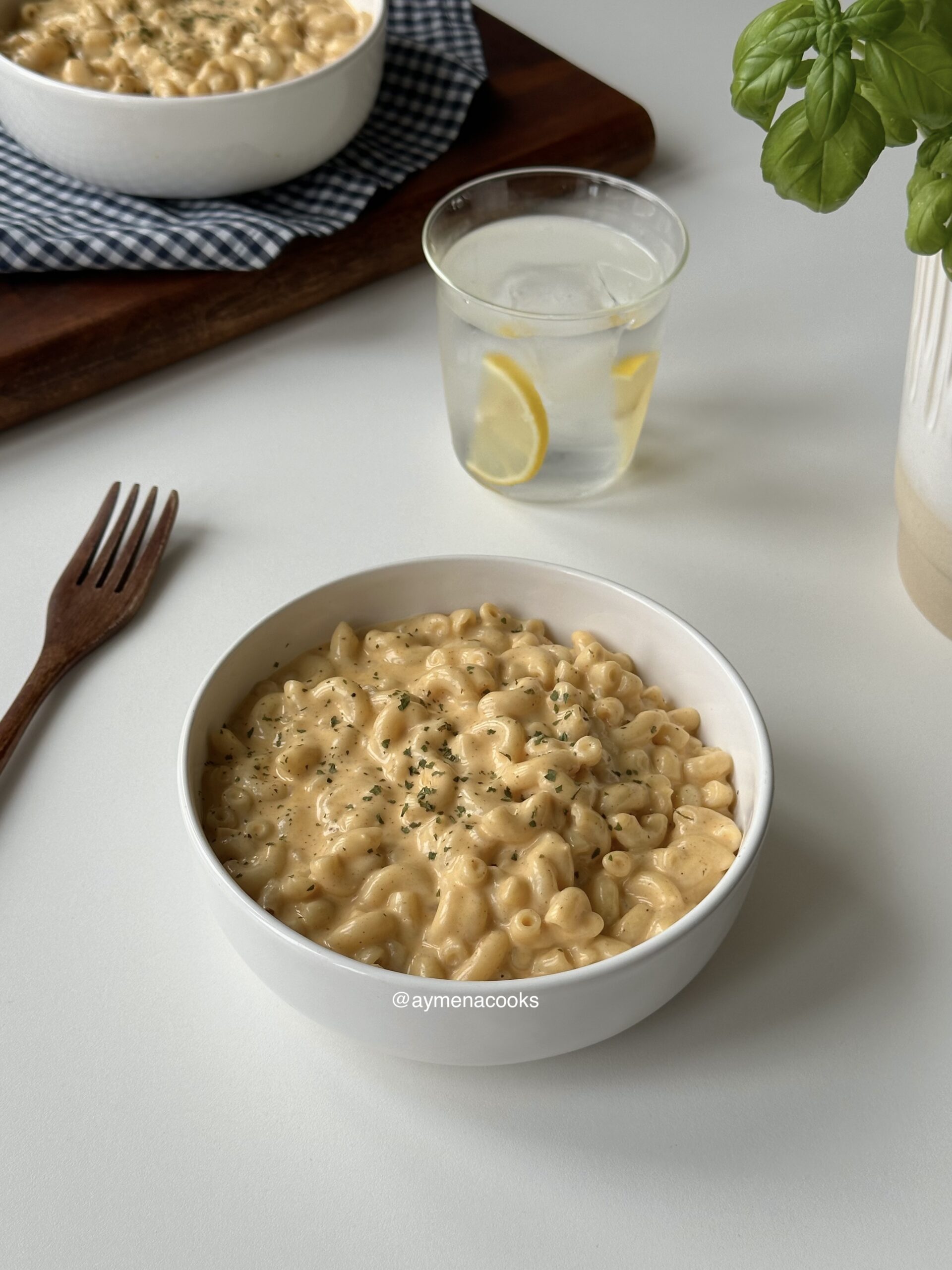
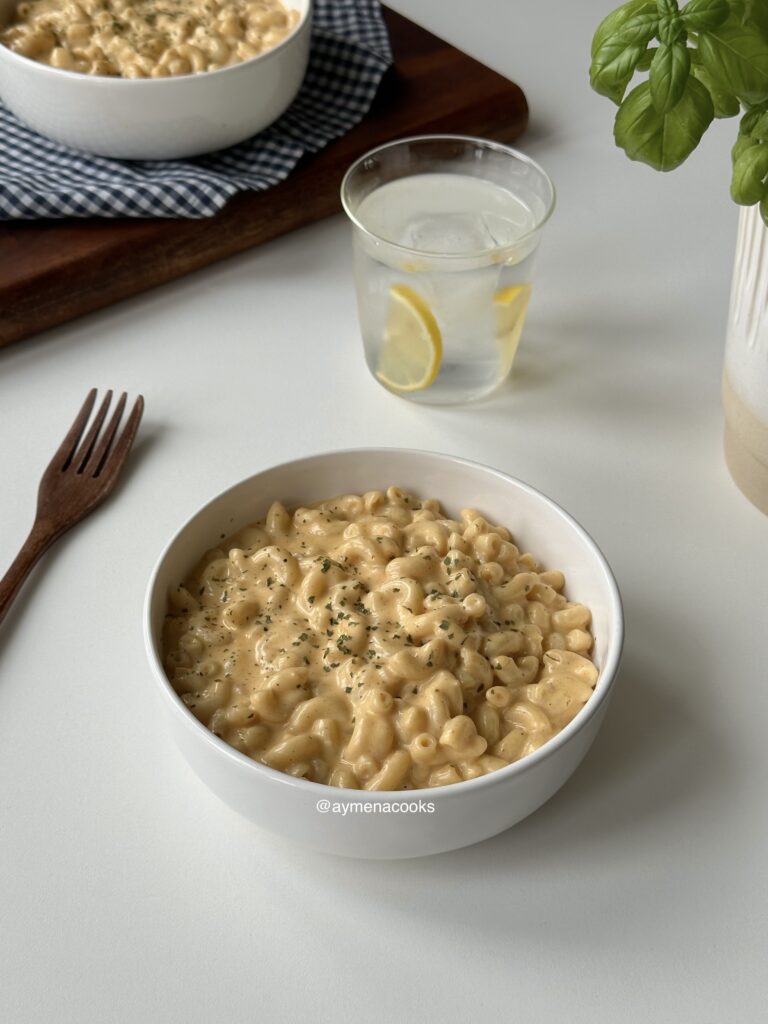
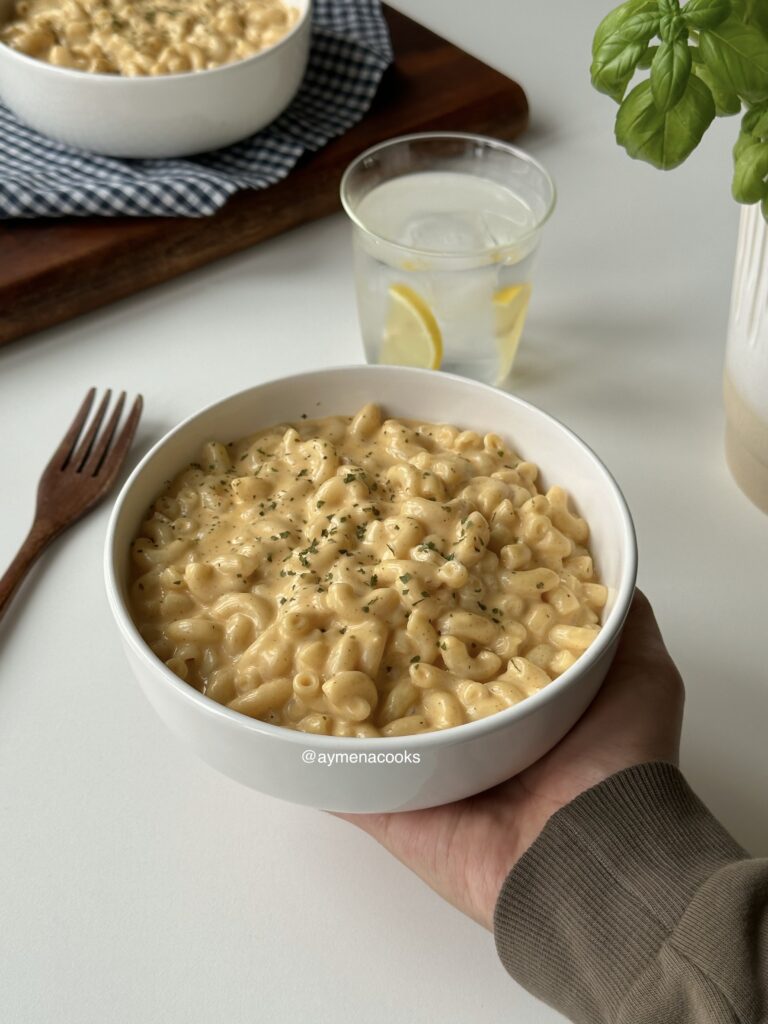
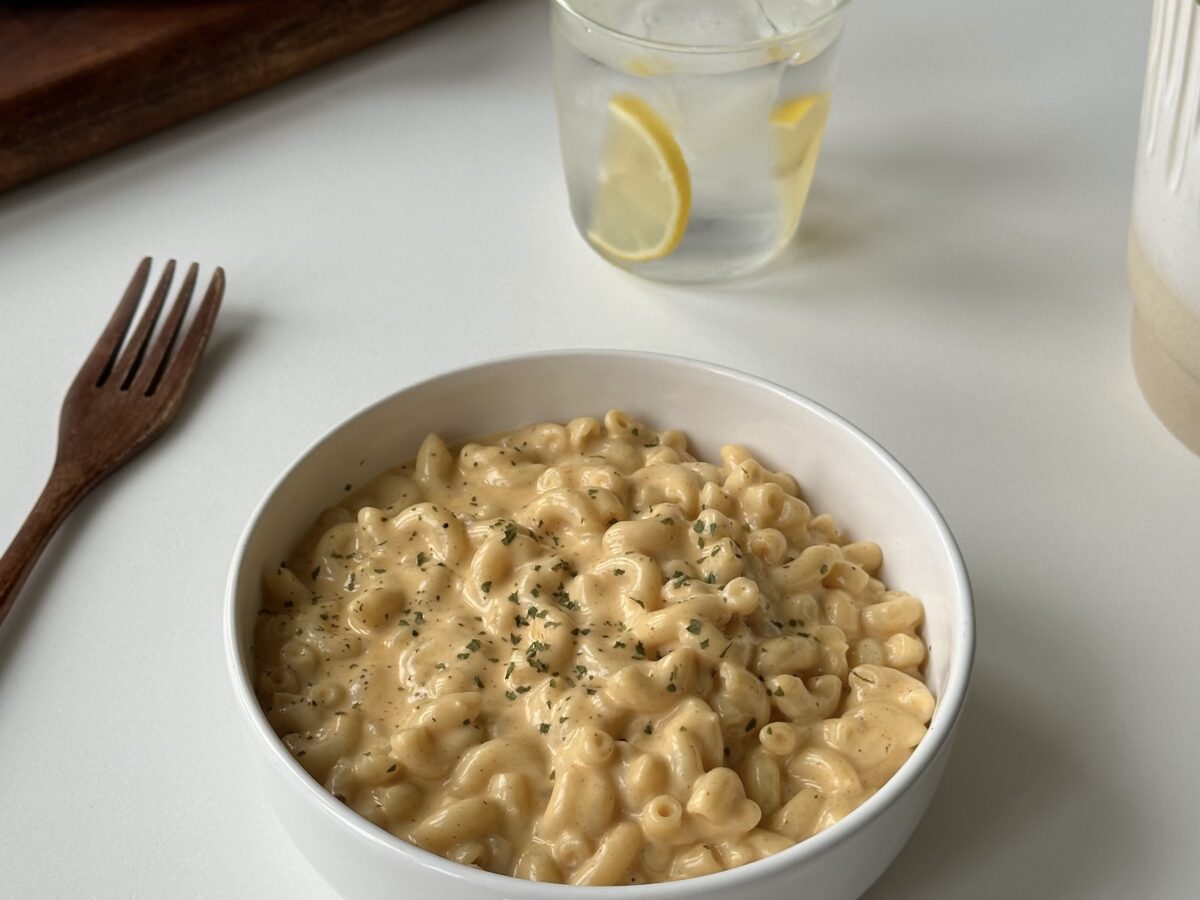
tender macaroni, a glossy three-cheese sauce and plenty of savoury flavour in every spoonful.
A note from my kitchen
I wanted this stovetop mac and cheese to be the kind of dinner you can make when you want something really comforting without ending up with a huge casserole dish of leftovers. It starts with just 180g (or about 6oz) of macaroni, so it makes a smaller batch while still giving you two generous bowls of creamy pasta.
The sauce is rich, garlicky and deeply savoury rather than tasting like plain melted cheese. I use milk and cream with a blend of three cheeses, then add a bunch of various seasonings. The seasonings sit behind the cheese and make the whole sauce taste fuller and more balanced without overpowering everything.
The macaroni is boiled separately and folded into the sauce at the end. There’s no baking dish, breadcrumb topping or oven time. As soon as the pasta is glossy and coated, it’s ready to spoon into bowls and serve.
What Is Stovetop Mac and Cheese?
Stovetop mac and cheese is macaroni coated in a cheese sauce that’s made and served straight from the saucepan. Unlike baked mac and cheese, it stays soft, glossy and spoonable because it doesn’t go through a second bake in the oven.
This version uses a simple butter-and-flour base, milk and cream, a savoury seasoning blend and three cheeses. The pasta is cooked separately, then stirred into the finished sauce so it can be served immediately.
Why You’ll Love This Recipe
- It makes a smaller batch. Using 180g (or about 6.3oz) of pasta gives you a generous amount of mac and cheese without creating a full family-sized tray.
- There’s no baking required. The sauce and pasta are finished on the hob, so there’s no oven, breadcrumb topping or extra waiting.
- The sauce is very cheesy but not overly heavy. A blend of three cheeses gives the sauce more depth than relying on one cheese alone.
- It’s full of savoury flavour. Fresh garlic, warm spices, mustard powder and stock powder stop the sauce from tasting flat.
- The texture is creamy and glossy. Milk and cream create a smooth sauce that clings to every piece of macaroni.
- It’s ready to eat straight from the pan. Once the macaroni is coated, you can serve it immediately while the sauce is at its creamiest.
What Does It Taste Like?
This stovetop mac and cheese tastes rich, creamy and deeply cheesy, with a rounded garlic flavour and a gentle savoury warmth.
Paprika adds colour and mild warmth, while mustard powder makes the cheese taste slightly sharper without making the sauce taste strongly of mustard. Garlic powder and onion powder season the sauce all the way through, and chicken stock powder gives it a fuller savoury finish.
The chilli powder adds a very small amount of heat, but the cheese remains the main flavour. Black pepper cuts through the richness and keeps the finished sauce from tasting heavy or one-dimensional.
ingredient Notes
The exact measurements are in the recipe card below. These are just the ingredients required to make this recipe.
Macaroni
This recipe uses 180g (or 6.3oz) of dry macaroni or another small pasta shape that holds a creamy sauce well.
Cook it separately until tender but not overly soft. The pasta will continue to absorb a little sauce once everything is combined, so avoid taking it too far in the boiling water.
Butter, Garlic and Flour
Butter forms the base of the sauce and carries the flavour of the fresh garlic.
Cook the garlic gently until fragrant and lightly golden rather than browned. The flour is then stirred into the butter to create a roux that thickens the milk and cream. Let it cook briefly so the finished sauce doesn’t taste floury.
Milk and Cream
Milk keeps the sauce smooth, while cream adds richness and gives the finished mac and cheese a more luxurious, silky texture.
Add the liquid gradually and whisk until smooth. The sauce should be thick enough to coat the back of a spoon before the cheese goes in, but it should still move easily around the pan.
Savoury Seasonings
Garlic powder, paprika, onion powder, mustard powder, chicken stock powder, chilli powder and black pepper give the sauce its savoury depth.
The seasonings should support the cheese rather than overpower it. Because the stock powder and cheeses may already contain plenty of salt, taste the finished sauce before adding any extra. I ended up not adding any extra salt to mine, but you can adjust this to your taste.
Three Cheeses
The three-cheese blend gives the sauce a fuller flavour and a smoother, more interesting finish than one cheese alone. I used a mix of Red Leicester, Cheddar and Mozzarella cheese, but you can use your favourite blend of cheeses.
Grate the cheeses finely before you begin so they melt and incorporate quickly into the sauce. I usually like to add them over low heat or remove the pan from the heat completely and add them in smaller portions, stirring until each addition has melted before adding the next.
Equipment You’ll Need
You will need a saucepan for boiling the macaroni, a second saucepan or deep frying pan for the cheese sauce, a colander, a whisk, a wooden spoon or silicone spatula and a cheese grater.
A digital kitchen scale will be useful for measuring the ingredients accurately, but measuring cups will also be fine.
How to Make Stovetop Mac and Cheese
The exact ingredient amounts and condensed instructions are in the recipe card. The stages below are step by step instructions with images to give you an idea of the colour and texture to look for throughout the recipe.
1. Boil the Macaroni
Bring a saucepan of water to the boil, add salt and cook the macaroni according to the packet instructions until tender but not overly soft.
Drain the macaroni well and set it aside while you make the sauce. You can also save some of the leftover pasta water in case you need it.
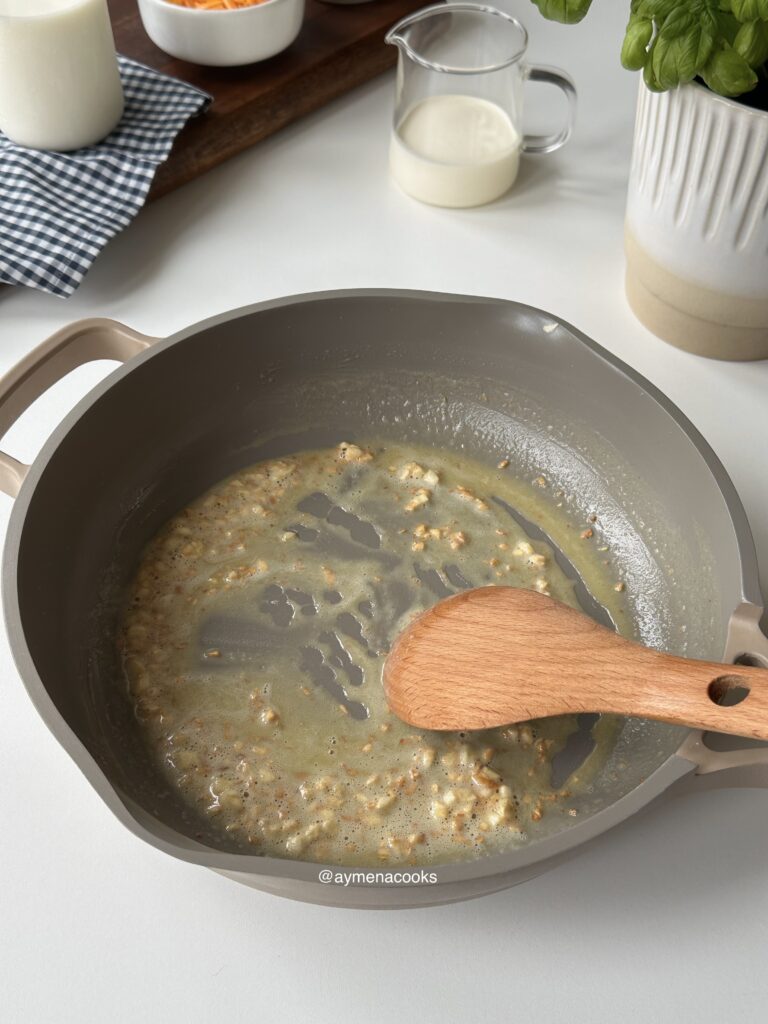
2. Cook the Garlic and Make the Roux
Melt the butter in a separate saucepan over low-medium heat.
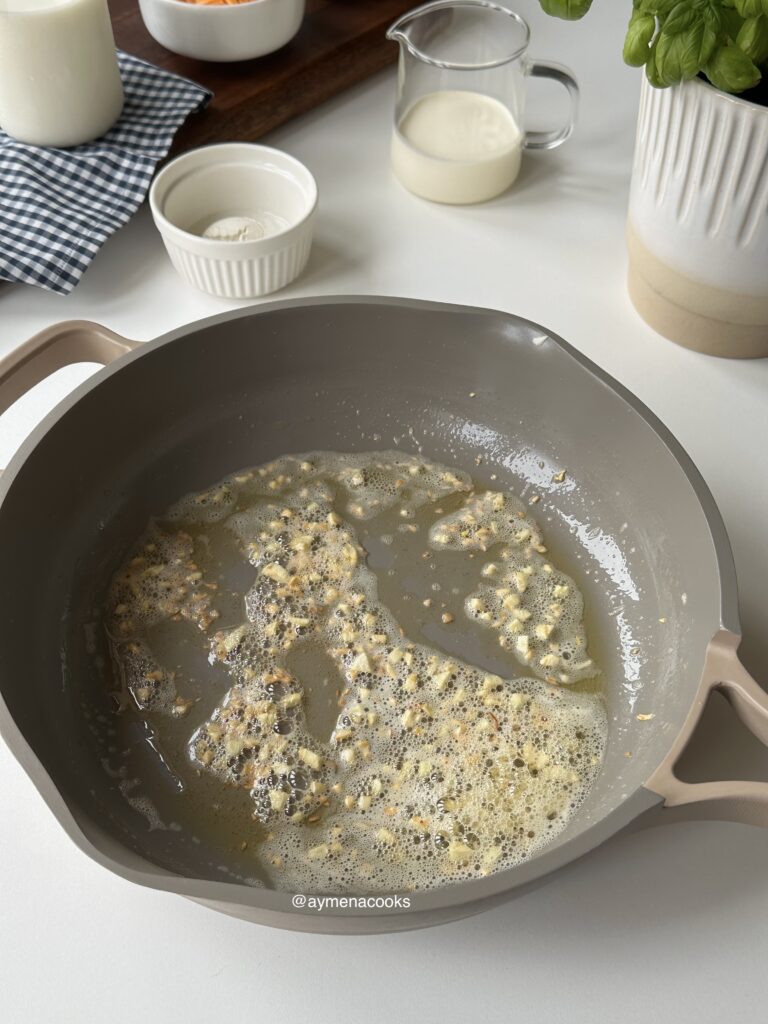
Add the fresh garlic and cook briefly until fragrant and the garlic becomes a light golden colour. Keep the heat gentle so the garlic doesn’t brown or become bitter.
Add the flour to the garlic butter and stir until no dry flour remains.
Cook the mixture for about thirty seconds to a minute, stirring continuously. It should bubble up and thicken slightly rather than become a browned roux or a thick paste.
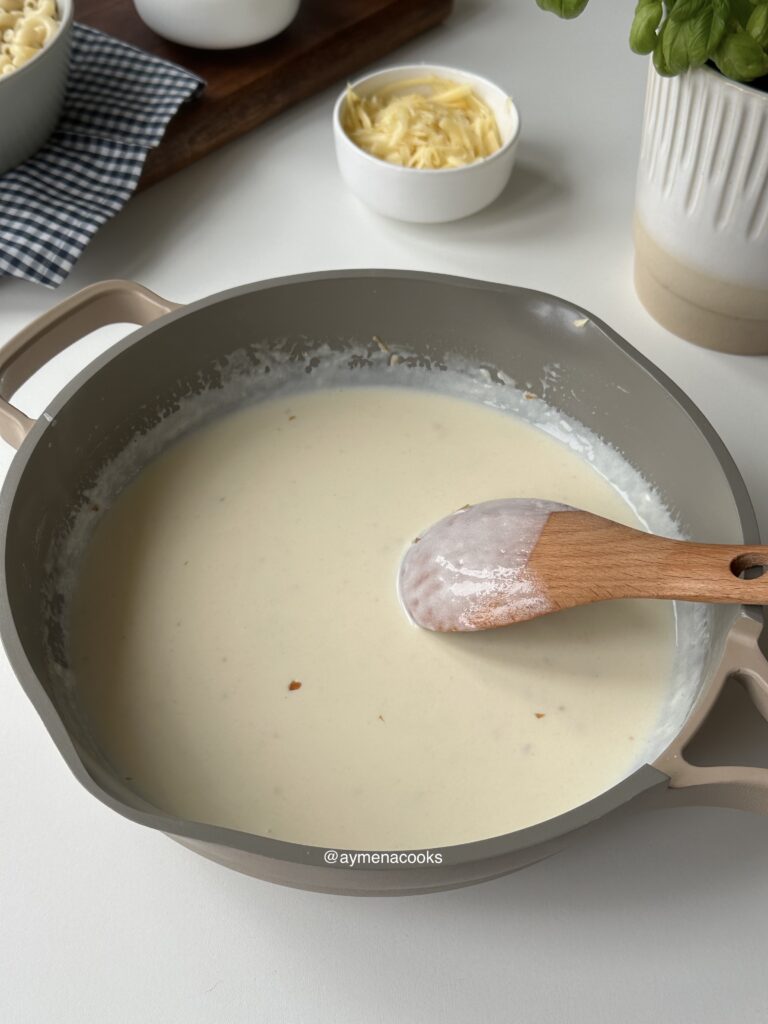
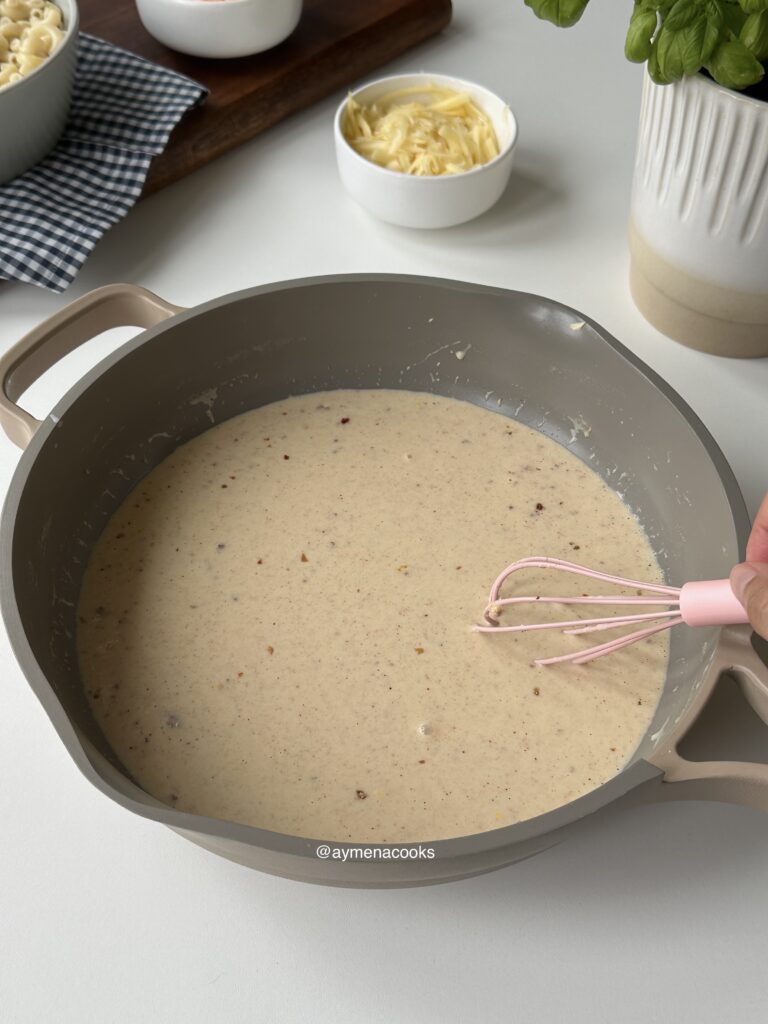
3. Add the Milk, Cream and Seasonings
Gradually add the milk, whisking until smooth as you pour it in. Bring the mixture to a gentle simmer, or a very low boil, stirring as you do this, until the sauce starts to thicken up.
Pour in the cream, and whisk it in until smooth. then add the garlic powder, paprika, onion powder, mustard powder, chicken stock powder, chilli powder and black pepper.
Cook gently, whisking regularly, until the seasonings have been incorporated and the sauce thickens enough to coat the back of a spoon.
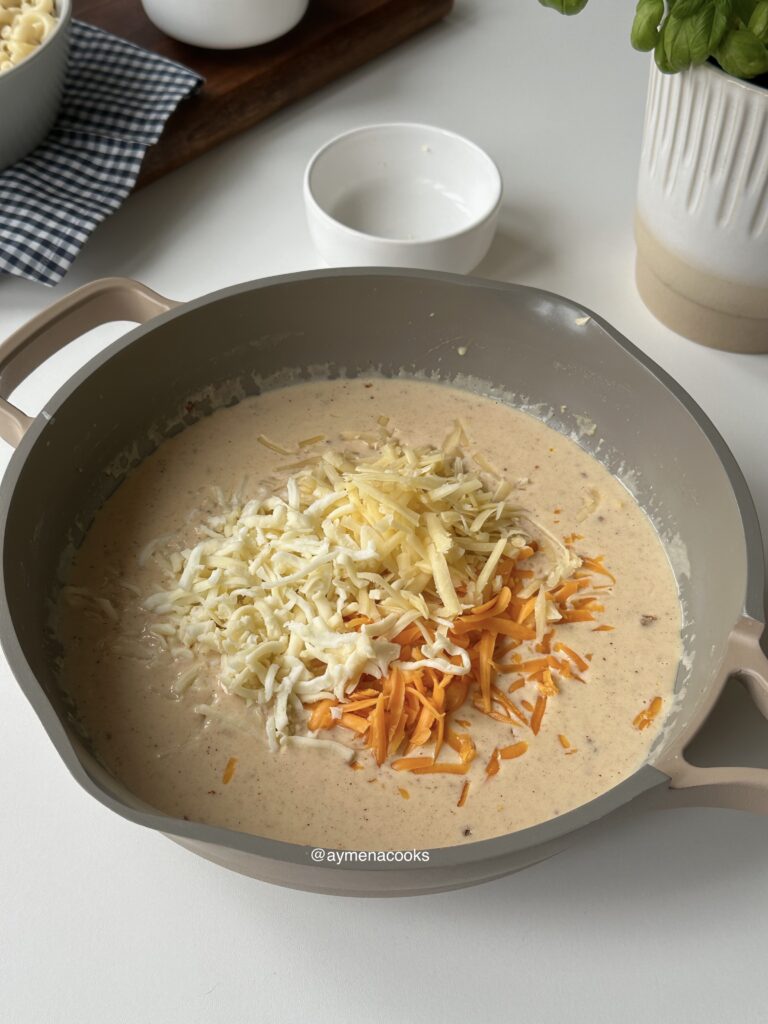
4. Melt in the Cheeses
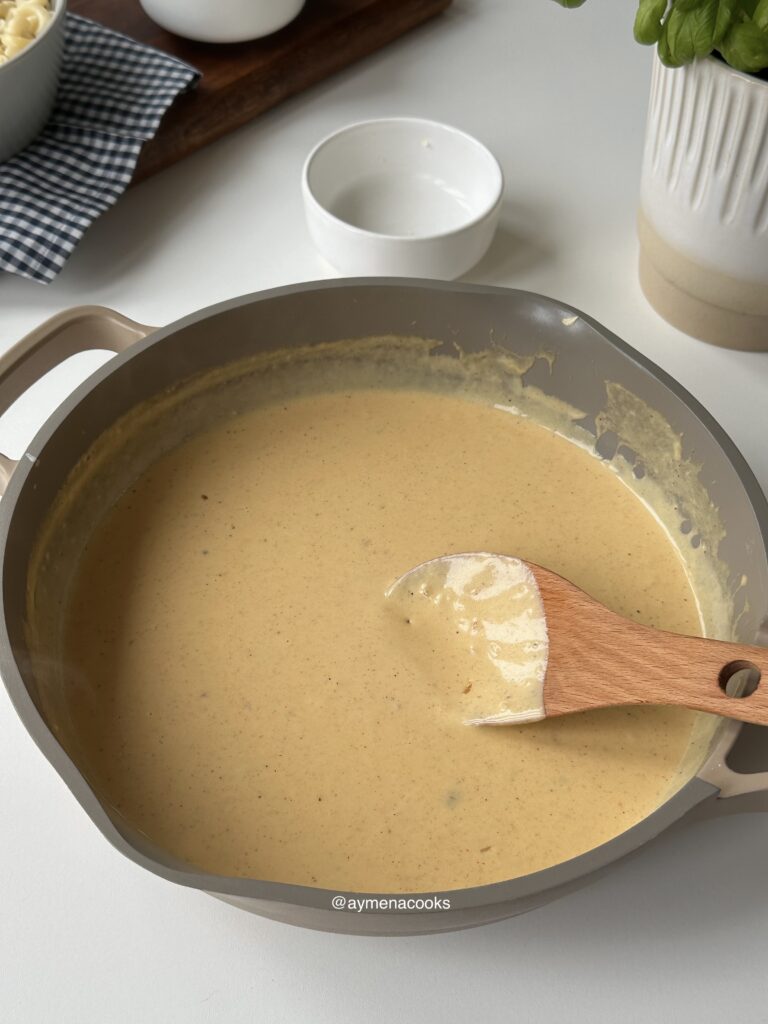
Remove the pan from the heat and add the three grated cheeses in small handfuls.
Stir after each addition until the cheese has melted and the sauce is smooth and glossy. The heat from the cream sauce will melt the cheese. If the cheese isn’t melting, you can gently cook the mixture over gentle, low heat and whisk the cheeses in until they melt and the sauce is completely smooth.
Do not let the sauce boil once the cheese has been added, as very high heat can make it split or turn grainy.
5. Add the Macaroni
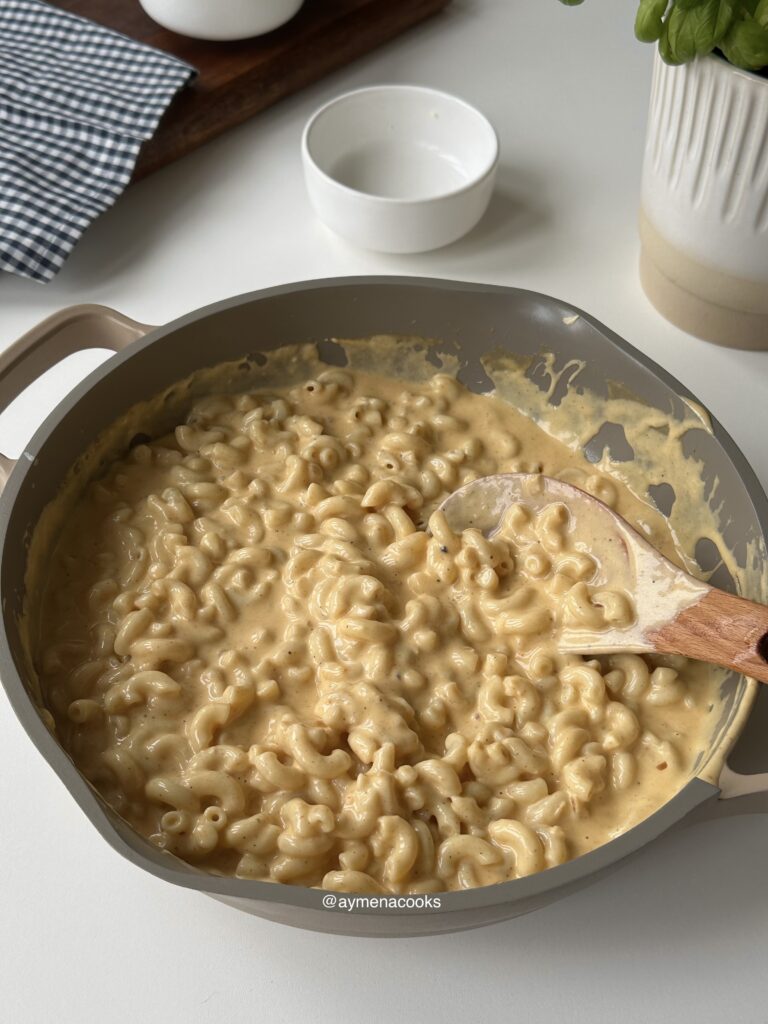
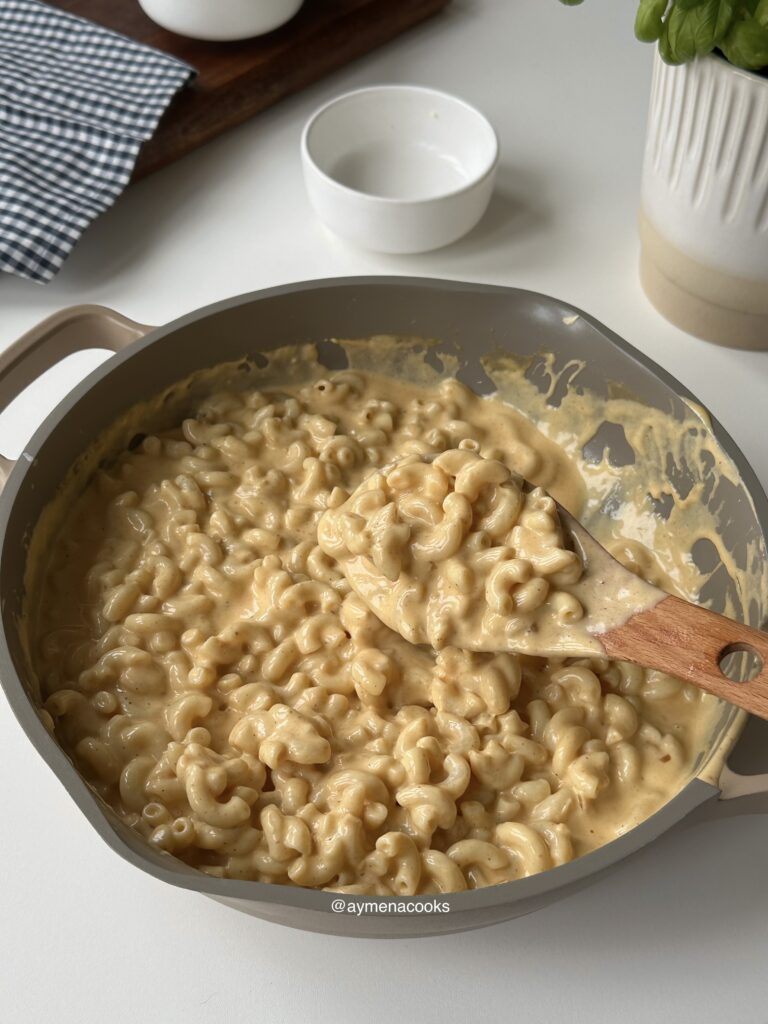
Add the drained macaroni to the cheese sauce and gently fold it in until every piece is evenly coated.
If the sauce has become thicker than you want, you can loosen it with a splash or two of leftover pasta water that you saved earlier. Taste, adjust the black pepper or chilli if needed and serve immediately.
Tips for the Best Stovetop Mac and Cheese
- Grate the cheeses yourself. Freshly grated cheese usually melts more smoothly than pre-grated cheese.
- Keep the heat gentle. High heat can make the dairy catch or cause the cheese sauce to split.
- Add the milk gradually. pouring the milk gradually and whisking it in as you pour makes it much easier to keep the sauce smooth.
- Do not overcook the pasta. Very soft macaroni can become heavy and even mushy once it’s stirred through the thick sauce.
- Make the sauce slightly looser than you think. The cheese and macaroni will both thicken it further.
- Do not boil after adding the cheese. Low, gentle heat gives you a smoother, glossier sauce.
- Taste before adding salt. For me, the stock powder and cheeses already provided enough seasoning, and I didn’t need to add any extra salt. But you can adjust this to your taste.
- Serve it straight away. Stovetop mac and cheese naturally thickens as it sits, so it’s best served warm and fresh straight from the pan.
Make Ahead and Storage
Stovetop mac and cheese is at its smoothest and creamiest immediately after it’s made.
You can keep any leftovers covered in the fridge. Reheat them gently over low heat in a saucepan or microwave with a small splash of milk, stirring regularly until the sauce loosens and the pasta is hot throughout.
Frequently Asked Questions
Why Is My Mac and Cheese Sauce Grainy?
The heat may have been too high when the cheese was added, or the sauce may have boiled after the cheese melted.
Keep the heat low or turn if off completely, add the cheese gradually and use finely grated cheese so it melts evenly.
Why Is My Cheese Sauce Too Thick?
The sauce continues to thicken as it cooks and again once the macaroni is added.
If the sauce is too thick for you, stir in a small splash of warm milk or some leftover pasta water until it reaches the consistency you want. Add only a little at a time so the sauce doesn’t become watery.
Why Is My Cheese Sauce Too Thin?
The milk and cream mixture might need a little longer to thicken before the cheese is added.
Cook it gently while whisking until the sauce coats the back of a spoon. Remember that the cheese and pasta will both thicken the sauce further.
Can I Use a Different Pasta Shape?
Yes. You can use another small pasta shape that holds sauce well, such as shells, short tubes or small spirals.
Keep the dry pasta weight at 180g (6.3oz) unless you also adjust the amount of sauce.
Is This Mac and Cheese Spicy?
The chilli powder adds a gentle warmth rather than making the dish hot or spicy.
Use less or leave it out if you prefer a completely mild mac and cheese. The paprika will still add colour and warmth.
Can I Use Pre-Grated Cheese?
You can, but some pre-grated cheeses contain anti-caking ingredients that can make the sauce less smooth.
Freshly grated cheese is the more reliable choice for a glossy sauce.
Can I Make Stovetop Mac and Cheese Ahead of time?
You can, but the macaroni will absorb more of the sauce as it sits and won’t be as smooth and creamy.
For the creamiest texture, make it shortly before serving. You can reheat leftovers gently over low heat with a splash of milk.
Does Stovetop Mac and Cheese Need to Be Baked?
No. This recipe is designed to be finished entirely on the stovetop and served straight from the pan.
Baking it would reduce the sauce further and change the creamy texture, so treat a baked version as a separate recipe.
More Pasta Recipes
For another creamy pasta dinner, try my cheesy chicken pasta with tender chicken, tomato cream sauce and melted mozzarella.
My chicken mac and cheese is a more substantial version with pieces of chicken throughout and an oven baked mac and cheese.
For something quicker and lighter, try my garlic butter pasta with a glossy no-cream sauce.
Stovetop Mac and Cheese
Tender macaroni coated in a rich, smooth three-cheese sauce for a creamy small-batch mac and cheese made entirely on the stovetop.
- 10 minprep
- 20 mincook
- total
- 2servings
ingredients
18 ingredientsPasta
- 180g dry elbow macaroni (6.3oz or ~1 cup + ¼ cup)
- water for boiling
- salt
Mac and Cheese Sauce
- 20g butter, unsalted (1 tbsp + 1 tsp)
- 3 garlic cloves, finely chopped
- 12g plain flour or all purpose flour (1 tbsp)
- 300ml whole milk (1 cup + ¼ cup)
- 100ml double cream or heavy cream (¼ cup + 3 tbsp)
- ½ tsp garlic powder
- ½ tsp paprika
- ½ tsp onion powder
- ½ tsp chicken stock powder
- ¼ tsp mustard powder
- ¼ tsp black pepper
- ⅛ tsp chilli powder (optional)
- 50g Red Leicester cheese, grated (~½ cup)
- 50g Cheddar cheese, grated (~½ cup)
- 50g Mozzarella Cheese, grated (~½ cup)
method
13 steps- Bring a saucepan of water to the boil, add salt and cook the macaroni according to the packet instructions until tender but not overly soft.
- Drain the macaroni well and set it aside. You can save some leftover pasta water in case you need it.
- Melt the butter in a separate saucepan over low-medium heat.
- Add the garlic and cook briefly until fragrant and a light golden colour.
- Add the flour and stir continuously for about thirty seconds to one minute until a smooth pale roux forms.
- Gradually pour in the milk, whisking gently as you pour it in.
- Bring the mixture to a gentle simmer, or a very low boil, stirring as you do this, until the sauce starts to thicken up slightly.
- Add the cream, garlic powder, paprika, onion powder, mustard powder, chicken stock powder, chilli powder and black pepper.
- Cook gently, whisking regularly, until the sauce coats the back of a spoon.
- Turn the heat to low, or remove from the heat completely, and add the three grated cheeses in small handfuls, stirring until each addition melts before adding the next.
- Do not let the sauce boil once the cheese has been added.
- Add the drained macaroni and fold it into the sauce until every piece is evenly coated.
- Loosen with a small splash of milk or some of the pasta water if needed, then taste and adjust the seasoning before serving immediately.
notes
- Use finely grated cheese so it melts quickly and evenly.
- Keep the heat low after adding the cheese. I actually prefer to remove the pan from the heat completely and add the cheese, as the heat of the sauce is usually enough to melt the cheeses. But if it's not enough to get the sauce completely smooth, you can whisk the cheese in over low heat until you get a smooth sauce.
- The sauce should be slightly looser before the macaroni is added because it will continue to thicken.
- Taste before adding any extra salt because the stock powder and cheeses may already provide enough. I personally didn't add any extra salt.
- The mac and cheese thickens as it sits and cools, so serve immediately while it's still warm.
tools
9 tools- Digital kitchen scale
- Measuring jug
- Measuring spoons
- Medium or large saucepan for the macaroni
- Medium saucepan or deep frying pan for the sauce
- Colander
- Whisk
- Silicone spatula or wooden spoon
- Cheese grater
comments
Questions, tips, and kind notes are welcome.